> ## Content Index
> Fetch the complete content index at: https://ftw.pi.tv/llms.txt
> Use this file to discover other available public pages before exploring further.
# Tapestry Prints Prototypes in Days, Repair Services Stall on Labour Costs, Slack Logs Contradict Phia's Account
- URL: https://ftw.pi.tv/tapestry-prints-prototypes-in-days-repair-services-stall-on-labour-costs-slack-logs-contradict-phias-account/
- Published: 2026-08-17T19:42:47.000Z
- Updated: 2026-08-17T19:42:47.000Z
- Description: Tapestry puts prototype turnaround at one to three days with on-site 3D printing; Primark, Uniqlo and Levi's expand in-store repairs that still run at pilot scale; leaked Slack messages contradict Phia's account of how it found its affiliate tracking problem.
- Author: Will Milling
- Tags: Tapestry, 3D printing, AI, Primark, Uniqlo, Levi's, Phia
### Tapestry Cuts Prototype Turnaround to Days With On-Site 3D Printing
Tapestry, owner of Coach and Kate Spade New York, ran a three-day internal AI summit at its Hudson Yards headquarters in early August, [which WSJ's CIO Journal was given a look inside](https://www.wsj.com/cio-journal/coach-and-kate-spade-owner-tapestry-shapes-a-culture-of-ai-2abeafac?ref=ftw.pi.tv). The most concrete disclosure came from its digital product creation team, which now runs half a dozen 3DD printers on site producing everything from small accessories to sneakers, and puts the turnaround on a printed shoe prototype at one to three days - a 75% reduction against ordering a sample from an overseas factory, according to senior manager [Tomer Emmar](https://www.linkedin.com/in/tomeremmar/?ref=ftw.pi.tv).
Physical prototypes remain necessary because on-site craftspeople have to confirm a design can be made at all; Emmar noted that AI-generated concepts specify construction, piping among it, that cannot be engineered as drawn.
Separately, Tapestry's consumer insights team has converted its research data - which extends to going into customers' homes and going through their wardrobes - into conversational personas covering US and Chinese Gen Z shoppers, which design, marketing and sales teams can question directly on lifestyle and motivation as well as buying habits. Kate Spade has built a voice-based tool that has store associates rehearse its "selling ceremony" against an AI shopper and scores them out of ten, though Victoria Santoriello, the brand's VP of customer experience and go-to-market strategy, said it is too early to tell whether associates who train more or score better actually close more sales. Chief information and digital officer [Yang Lu](https://www.linkedin.com/in/yang-lu-5153071/?ref=ftw.pi.tv) presented the programme as a cultural exercise rather than a technical one.
[](https://www.wsj.com/cio-journal/coach-and-kate-spade-owner-tapestry-shapes-a-culture-of-ai-2abeafac?ref=ftw.pi.tv)
***Why it matters:*** The number that matters is the sampling loop, where cost sits in freight, duty and rework rather than software. It is Tapestry's own figure with no stated baseline, and it covers prototype turnaround only - but a one-to-three-day physical iteration means a designer can be wrong more times before a range is committed.
The gain also depends on having craftspeople on site to catch what the model got wrong, so skilled hands are the constraint on the technology rather than the target of it. The store associate tool is the contrast: a senior executive saying on record that there is no measured effect on conversion, only a preference for rehearsing with software over colleagues.
---
[](https://pi.tv/events/207?ref=ftw.pi.tv)
---
### Repair Services Scale Up in Store, but the Labour Maths Still Fails
Primark, Uniqlo and Levi's are all extending in-store repair and alterations offers, [according to a Retail Gazette survey of retailer-run mending programmes](https://www.retailgazette.co.uk/blog/2026/08/primark-and-uniqlo-turn-to-clothing-repairs-in-bid-to-win-over-gen-z/?ref=ftw.pi.tv). Primark has delivered more than 730 free repair workshops since 2021 across nine of the 17 markets it trades in, and between March and June trialled a paid repair desk with UK alterations platform The Seam at three stores - Manchester Market Street, Bromley and Edinburgh Princes Street - running one day a week, with simple same-day fixes from £3 to £10 and the cost subsidised by the retailer.
Uniqlo's RE.UNIQLO Studio, covering repairs, embroidery, restyling and sashiko stitching, is live in 75 of roughly 2,500 stores globally. Levi's operates Tailor Shop customisation and repair across hundreds of stores and has built a 90-minute hand-sewing course for US high-school students, having found younger buyers wanted second-hand clothing but lacked the skills to maintain it. Zara's repair, alterations and resale platform now runs in 17 markets.
GlobalData's Neil Saunders said such schemes put a "halo on the brand"; H&M has been more direct, noting that repairing and reselling a garment typically costs more than making a new one, and has joined Primark and ThredUp in lobbying for tax measures to improve the arithmetic.
[Primark and Uniqlo turn to clothing repairs in bid to win over Gen Z - Retail GazettePrimark, Uniqlo and Levi’s are ramping up repair services and sewing initiatives in a push to attract younger shoppers increasingly interested in resale, sustainability and making clothes last longer. Retailers are increasingly offering everything from in-store repairs and alterations to workshops teaching customers how to sew buttons, patch holes and mend damaged clothing. Primark has...Retail GazetteKieran Howells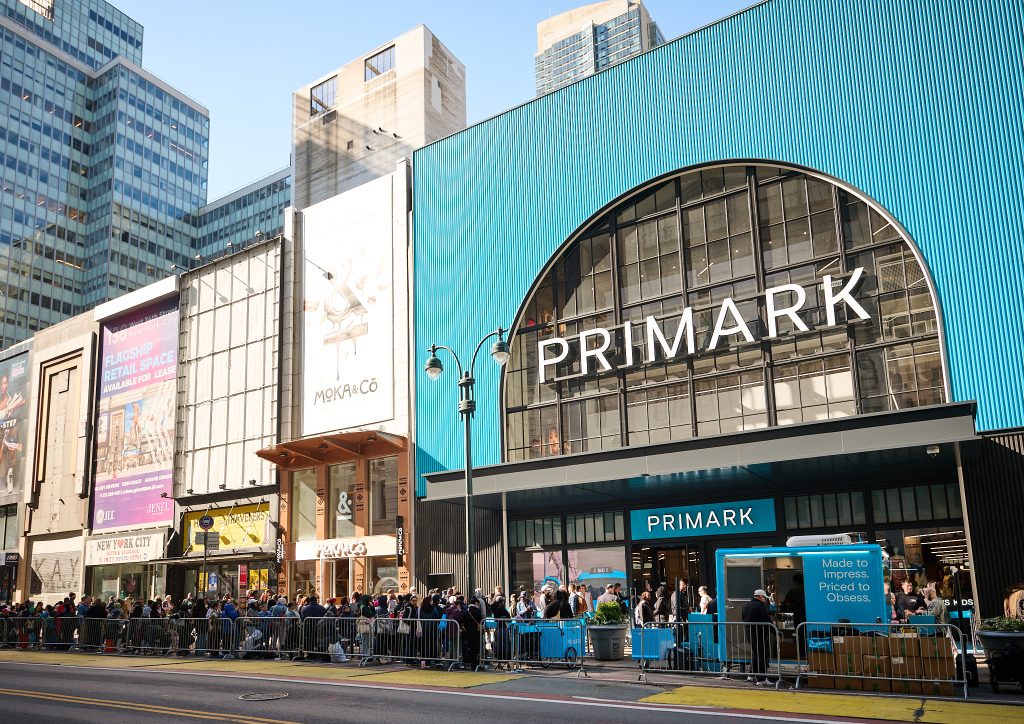](https://www.retailgazette.co.uk/blog/2026/08/primark-and-uniqlo-turn-to-clothing-repairs-in-bid-to-win-over-gen-z/?ref=ftw.pi.tv)
***Why it matters:*** Reading the figures rather than the press language and these are pilots, not meaningful services - three per cent of Uniqlo's estate, three Primark shops open one day a week. Repair cost is skilled labour, roughly fixed per garment and rising, while the value of the garment falls with every wear, so the margin inverts fastest at exactly the price points where fast fashion operates.
Scaling it means taking labour out of the loop or relocating it, which is a routing, capacity and pricing problem - the reason The Seam is the more interesting company in this story than any of the retailers named alongside it. It also requires knowing at item level what a garment is made of, how it was constructed and what it is worth now, which turns digital product identity from a compliance exercise into an operating input. That H&M and Primark are lobbying for tax relief is illustrative that the model does not close on operations alone.
---
### Slack Logs Contradict Phia's Account of Its Affiliate Tracking
[Internal Slack messages and source code reviewed by Bloomberg](https://fortune.com/2026/08/12/phoebe-gates-phia/?ref=ftw.pi.tv) show that Phia's founders discussed the mechanics of its affiliate tracking with engineers from December, seven months before the company said publicly it had learned of the problem within the previous 24 hours. When [FTW](https://ftw.pi.tv/tag/phia/) covered the original allegations, the open question was whether misattribution was accidental; the answer appears to be that it was a switch on an internal dashboard labelled "enable coupon auto drop", turned off on 7 July, the day Bloomberg first made contact.
Two mechanisms have been identified in Phia's historical code: a passive trigger that re-dropped the company's cookie every two hours on any top-1,000 site where a user had previously interacted with the extension, and a second that fired a cookie on any click once the pop-up had loaded, including a click intended to dismiss it. Nike, Gap and Nordstrom are among the retailers affected. Told by a colleague that Chrome extension policy prohibits cookies triggered by dismiss events, co-founder Sophia Kianni replied "whatever we can do to keep these cookies dropping", before suggesting the action could be described differently.
An internal chart shows average daily revenue falling from roughly $80,000 to between $10,000 and $28,000 once the features were disabled, and a Phia data scientist estimated on 7 July that the practice accounted for around 51% of June merchandise value - figures the company disputes, saying the analysis was preliminary and that it shut off most of its monetisation at the same time. Phia says it is reversing affected transactions, reviewing its books and hiring a head of compliance.
[Phoebe Gates knew Phia shopping app took credit for sales it didn’t drive | FortuneThe feature drove about 51% of Phia’s June merchandise value and was disabled only after Bloomberg’s July inquiry, despite publicly claiming a bugFortuneBloomberg and Olivia Solon and Priyanjana Bengani and Jeff Kao](https://fortune.com/2026/08/12/phoebe-gates-phia/?ref=ftw.pi.tv)
***Why it matters:*** Take Phia's own defence at face value and it is still the admission: switching off its monetisation techniques removed most of the revenue. That is the number brands should hold onto, because it prices how much of an AI shopping agent's reported performance can be attribution capture rather than demand it created.
The distinction between a bug and a toggle is what turns this from an engineering failure into a diligence question, and the retailers named are large enough that most affiliate programmes in fashion share the same plumbing. Anyone signing a commission deal with an agentic shopping tool now needs to ask how incrementality is measured before agreeing what gets paid.