True FIT AI Shopping Assistant, ASOS Virtual try-on, EU's Fashion Design Protection
True Fit launches an agentic AI fit assistant powered by 20 years of data; ASOS debuts hybrid virtual try-on with AIUTA, blending real photos and AI avatars; EU Court confirms fashion designs don’t need artistic originality to qualify for protection across the bloc.
True Fit Launches Agentic AI Shopping Experience Powered by 20 Years of Fit Data
True Fit has unveiled an agentic AI shopping assistant designed to tackle fashion’s most persistent conversion killer: “Will this fit?” Built on nearly 20 years of purchase and returns data (spanning $616 billion in transactions, hundreds of millions of shoppers, and 60 million products), the agent delivers real-time size and fit guidance directly on retailers’ product pages. The system identifies hesitation signals, recommends a single best-fit size based on actual keep-and-return behaviour, and integrates with platforms like Shopify with minimal engineering lift.
Why it matters: Agentic commerce is quickly becoming retail’s new battleground, but in fashion, intelligence demands fit data. With nearly $850 billion in projected returns for 2025 and one in five online orders coming back, size uncertainty remains one of the industry’s most expensive problems. True Fit is betting that structured, proprietary fit data, will define which shopping agents actually move the needle on conversion and returns.

ASOS Launches Hybrid Virtual Try-On With AIUTA
ASOS has unveiled a hybrid virtual try-on experience, allowing shoppers to either upload their own photo or generate an AI model that reflects their size and likeness. Built in partnership with AIUTA, the feature debuts on the ASOS iOS app with around 10,000 products, initially available to select UK and US customers. Each try-on renders in 4-7 seconds (faster than many existing solutions) aiming to reduce hesitation at checkout and boost purchase confidence.
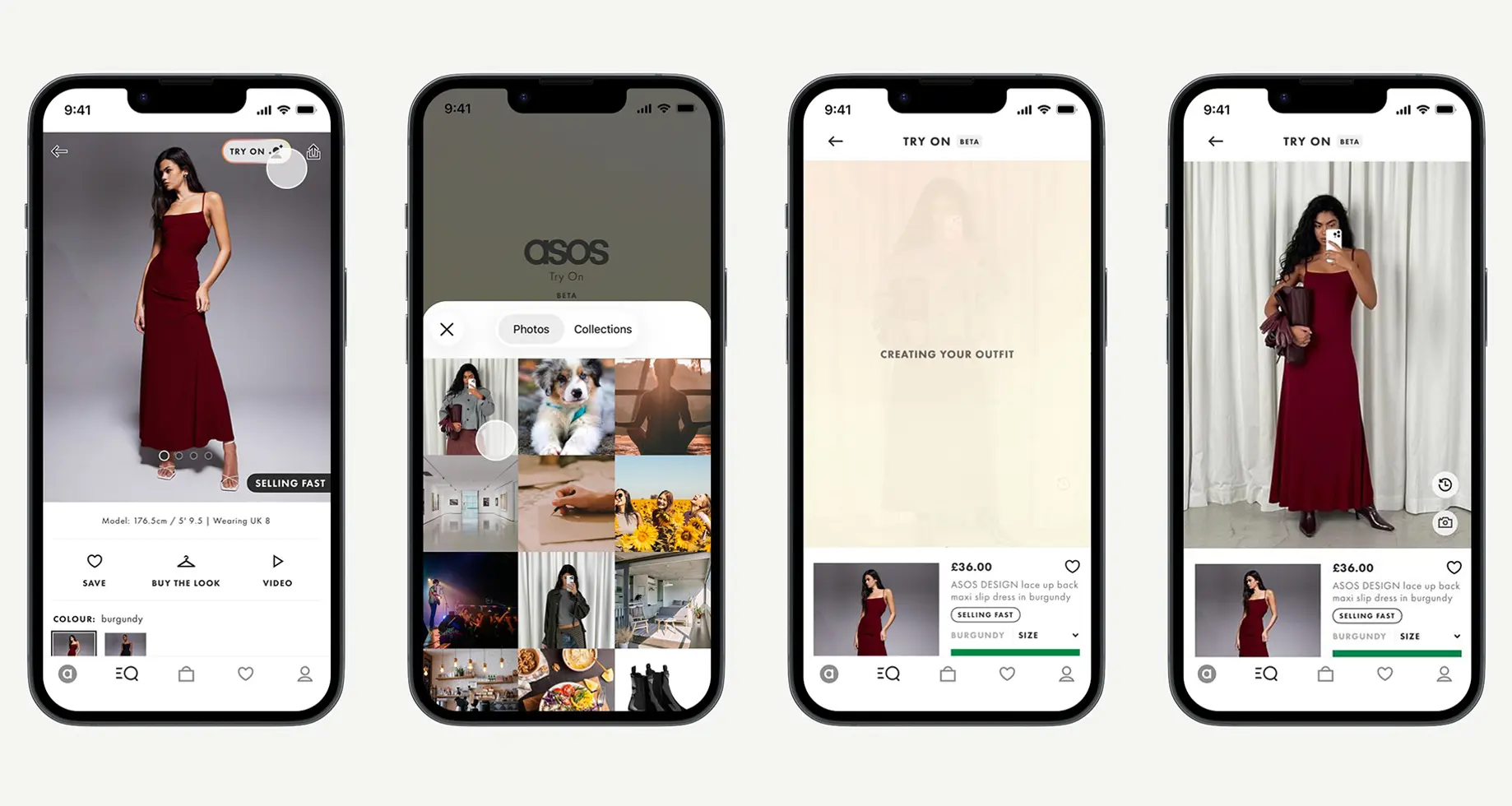
Why it matters: Virtual try-on has long struggled with a trade-off between realism and comfort - some users resist uploading photos, others distrust generic avatars. By offering both, ASOS reframes VTO as a flexible UX layer rather than a single tool. For fashion e-commerce, this shows a continued shift towards personalization at scale. Speed, optionality and psychological comfort matter as much as technical accuracy.
EU Court Lowers the Bar for Fashion Design Protection
The Court of Justice of the European Union has delivered a significant win for commercial fashion design, confirming that EU design rights do not require originality, artistic merit, or a minimum level of creativity. In Deity Shoes v Mundorama Confort and Stay Design, the court ruled that even shoes built from supplier catalogues, with largely predetermined components and incremental tweaks, can qualify for protection, provided they create a different “overall impression” on an informed user.
The judgment draws a sharp line between copyright and design law. Design protection exists to safeguard new and distinctive products that are functional and mass-produced, not to reward artistic genius. Predetermined features and trend-aligned aesthetics do not automatically strip a design of “individual character.”
Why it matters: For brands working within tight supplier ecosystems and fast trend cycles, this materially lowers the bar to enforce design rights across the EU. In a social-media-driven market where silhouettes and details spread globally in days, the ability to protect commercially viable, trend-responsive products - without proving creative brilliance - strengthens the defensive toolkit for high-volume fashion players.
 Tina Kondouli