


JD Sports Completes RFID Rollout Across 1,000 Stores in 14 Months
JD Sports has finished phase one of its RFID programme, with Germany going live this week as the last market under its direct control. Dan McGrath, who leads customer operations for JD Group, said the retailer launched 1,000 stores directly in 14 months. Across the wider group, including franchises and joint ventures, 2,700 of 4,800 stores went live in the same period, a pace of 192 stores a month.
The software comes from Checkpoint Systems, whose cloud-based ItemOptix platform JD signed under a multi-year global deal after a five-store pilot in the UK, France and Spain in late 2024. JD built the RFID workflows into its existing store app rather than adding a separate tool, and tunnel readers at its Rochdale and Heerlen distribution centres scan up to 540,000 items an hour. The upstream number matters most. JD says it has worked with its brand partners to raise the share of product arriving with RFID tags from around 40% to 73%. The only performance figures so far come from the pilot, where Checkpoint reported a 12% gain in on-shelf availability and 20% faster restocking.
 Scott Thompson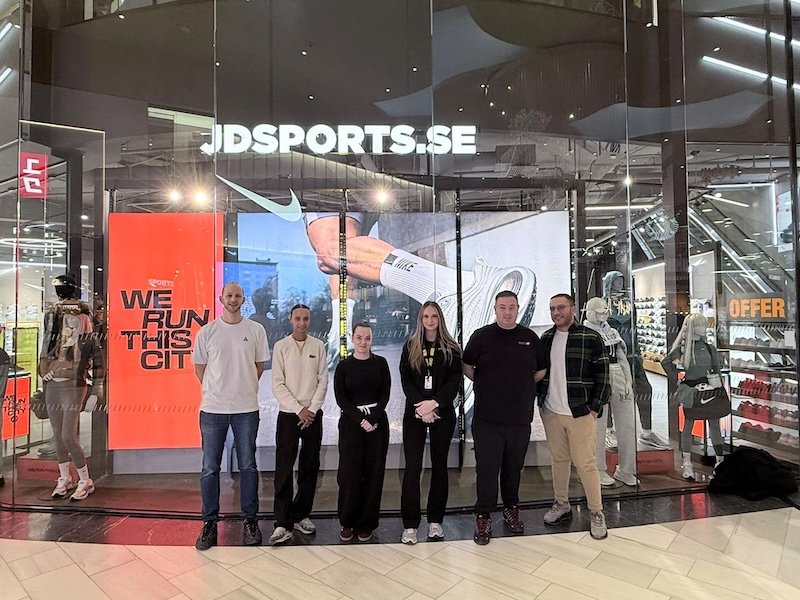
Why it matters: JD hit a target set for the end of 2026 three months early. The more important achievement sits outside its own stores. Tags on 73% of product mean Nike, Adidas and the rest are applying them at source, and a multi-brand retailer can't get there by itself. That coverage gives JD an item-level record of what sits in each store, and that record has a direct commercial use.
JD already plans to let US shoppers buy through ChatGPT, Gemini and Copilot. An AI agent that promises a shopper a size in stock at a nearby store needs inventory data it can trust, and RFID supplies it. JD has yet to publish results from the full rollout.

Vogue World Sends Unitree Robots Down the Runway, Backed by Meta and OpenAI
Vogue World's Milan edition closed with a troupe of humanoid robots from Chinese maker Unitree, in a segment titled The Age of Intelligence. The robots walked into the Galleria to Gigi D'Agostino's "L'Amour Toujours", waved at the crowd to prompt applause and wore no clothes. Footage of Valentino creative director Alessandro Michele watching from the front row went viral, and most of the coverage since has focused on the robots rather than the collections.
Vogue World is Condé Nast's annual travelling runway and celebrity show, now in its fifth year. Organisers billed the Milan edition as a tribute to Italian craftsmanship and the human touch. Meta's glasses business sponsored the event, with further support from OpenAI, and the 2027 edition will be staged in San Francisco. Jason Johnson, founder of Culture Impact Agency, summed up the arrangement plainly: "Publications are figuring out new ways to make money and tech has money."
 Dominic-Madori Davis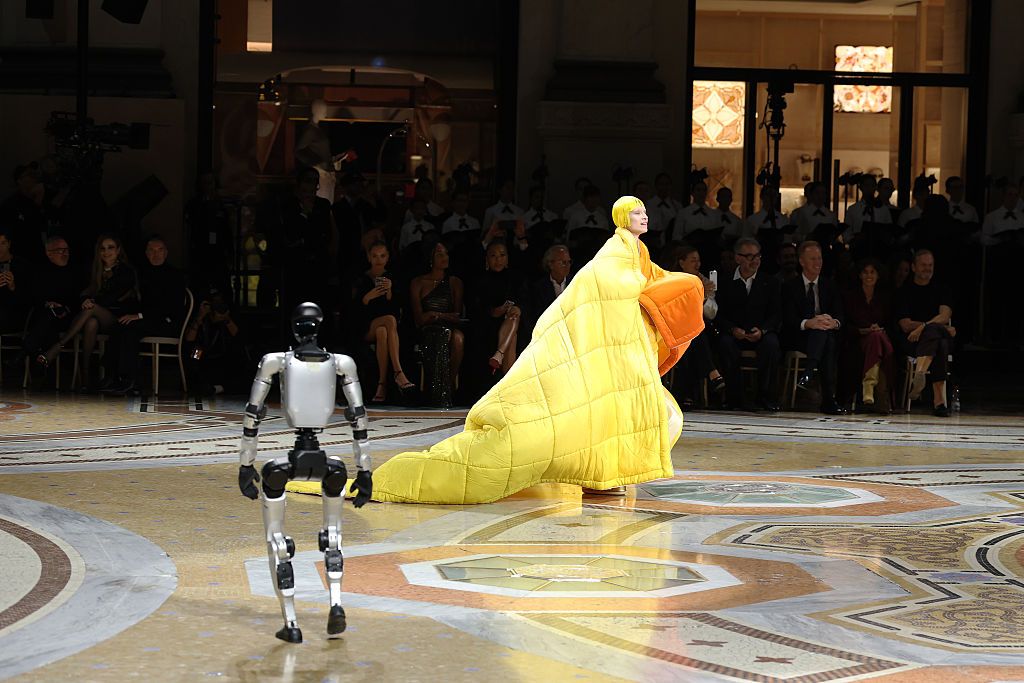
Why it matters: The robots are a distraction from the deal underneath. Meta needs fashion credibility to sell glasses, and Vogue offers the most concentrated form of it on the market. Moving the flagship event to San Francisco confirms which direction the money flows.
The reaction in Milan shows the cost of the trade. A show sold on craftsmanship ended with hardware that had no connection to any garment, and the room interpreted it as a sponsor's slot. Brands weighing technology partnerships for their own shows should take the point: technology earns attention on a runway when it changes the product, not when it performs next to the product.
Tesco Trials Aiuta Virtual Try-On for F&F ClothingTesco Trials Aiuta Virtual Try-On for F&F Clothing
Tesco is testing virtual try-on for the first time, with a screen in the clothing department of its Sandhurst Extra store. Shoppers can take or upload a photo of themselves to see around 1,500 F&F menswear and womenswear items, or pick a digital model to view the clothes in different sizes.
The technology comes from AI fashion firm Aiuta. The screen is one part of a wider F&F refit that adds new changing rooms, a service hub for checkout and returns, a larger range, and new signage and lighting. Tesco says the trial will show how it can help in-store browsers find new styles and feel more confident before they buy. It gave no timeline for the pilot and no plans for a wider rollout. The trial runs alongside an expansion of F&F online, which now carries hundreds of extra styles, more sizes, online-only ranges and improved search, a year after Tesco launched the online offer.
 Katie Searles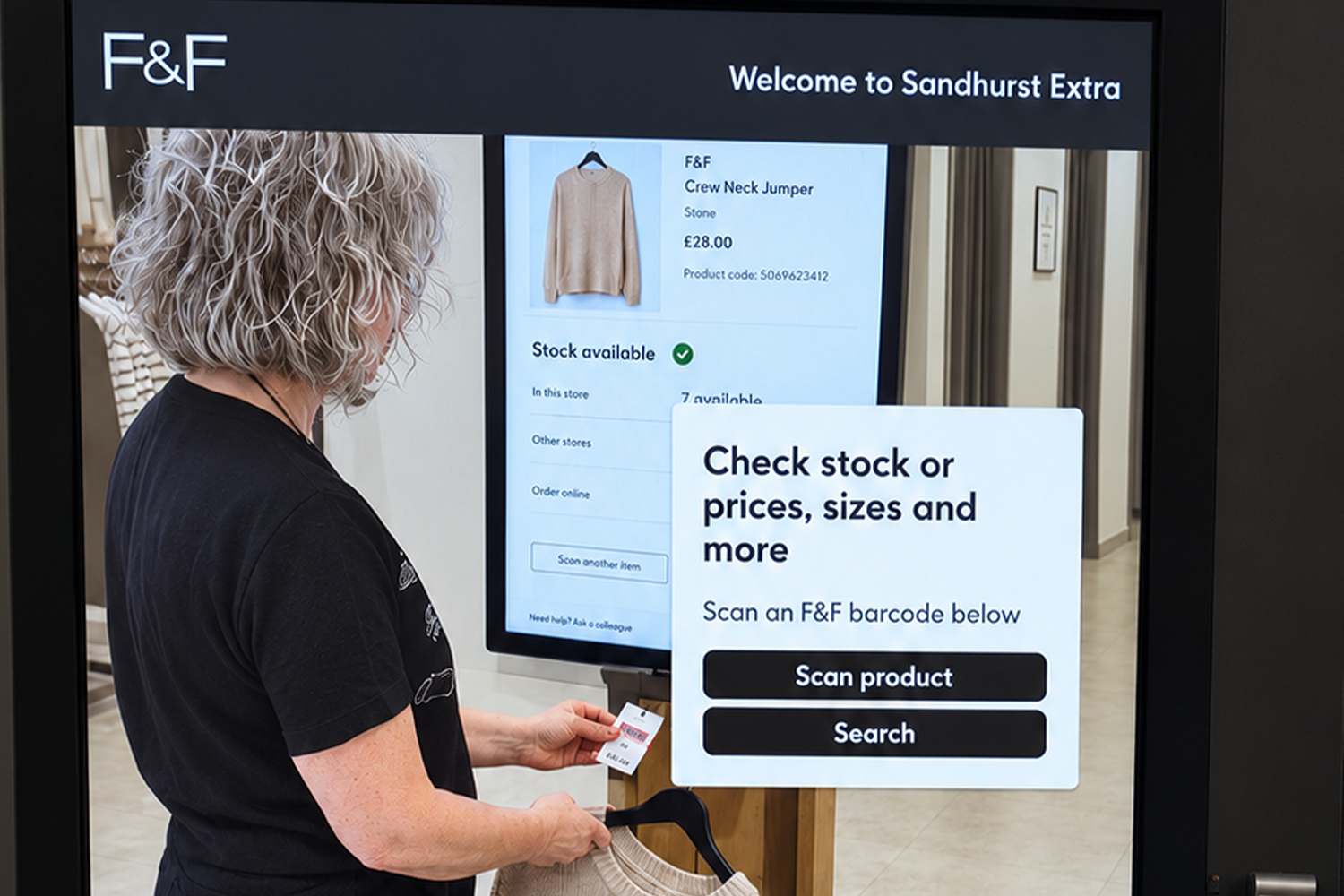
Why it matters: Most virtual try-on pilots target ecommerce returns. Tesco has put its screen in a store that also has changing rooms, so it needs another reason to exist. A supermarket clothing shopper is often mid-shop with a full trolley and little appetite for undressing, which makes a photo-based preview a lower-effort alternative to the fitting room.
The size view could also show shoppers fits that aren't on the rail, particularly since Tesco has added more sizes online. Tesco has said nothing about whether shoppers can order from the screen, and that's the detail that decides whether this is a gadget or a sales channel. With F&F competing directly against Sainsbury's Tu and Asda's George, the numbers to watch are conversion among screen users and orders placed online from the store.