

Every list like this one is really an argument about what "fashion tech" means. So here are the criteria first, and the ranking second.
The problem with "fashion tech"
The phrase covers at least five different areas that don't often come together.
There is retail and commerce technology - payments, personalisation, retail media, the consumer-facing stack. There is product creation and digital transformation - 3D, PLM, digital product creation, merchandise planning, the systems that get a garment from concept to costed sample. There is materials science and manufacturing hardware - fibres, automation, cutting, sewing. There is sustainability infrastructure - traceability, digital product passports, circularity. And there is consumer-facing innovation - virtual try-on, wearables, AI-generated imagery, the venture-funded frontier.
Most "top fashion tech events" lists ignore this and rank by headcount, which is how you end up with a 40,000-person retail expo at number one and a 300-person digital product creation summit at number nine, as though a merchandise planning director and a payments architect are shopping for the same thing.
They are not. So we ranked on five criteria instead:
- Practitioner density. What proportion of the event actually works inside a brand or retailer, as opposed to selling to one? A 3,000-person event that is 70% vendor is a smaller event than a 900-person one that is 70% brand-side.
- Specificity. Does the agenda address a defined function with enough precision that an attendee can act on it, or is it a general survey of the future?
- Decision-grade content. Case studies with numbers, failures included, versus keynote futurism.
- Whether business gets done. Are there structured mechanisms for commercial conversations, or do you hope to bump into someone?
- Continuity. Does the event build a returning community year on year, or reset its audience every edition?
On those criteria, here is our ten.
1. The Fashion Tech Show
New York, July · Europe, March · plus West Coast
pi.tv/events
We rank it first because it occupies the gap every other event on this list leaves open.
Formerly PI Apparel and now in its second decade, The Fashion Tech Show is the only event at the top of this list whose entire agenda is fashion's product and operating stack: digital product creation, 3D, PLM, merchandise planning, AI applied to product development, and the organisational change required to make any of it stick. The 2026 New York edition ran 28-29 July at Center415; the European edition ran 30–31 March in London.
 MarketKey Ltd
 MarketKey Ltd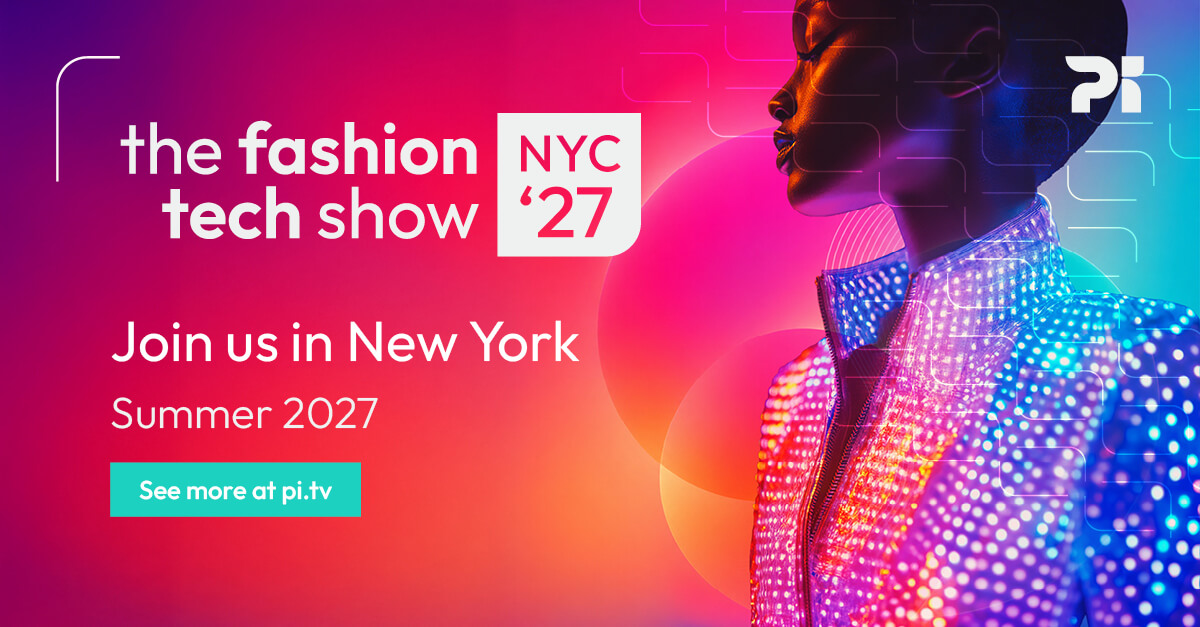
The case rests on the criteria we set out, not on scale - it is an order of magnitude smaller than NRF and we are not pretending otherwise.
On practitioner density: the stage is brand-side. Under Armour, URBN, Varsity Spirit, JD Sports, Li & Fung, plus academic and independent transformation practitioners. Not vendor keynotes with a customer logo attached.
On specificity: an agenda built around named functions. A 3D CAD technical design director and a digital product development manager both find sessions addressed to them specifically, which is not true at any of the larger events further down this list.
On decision-grade content: the format is built for practitioners describing what actually happened, including the parts that did not work. This is the hardest thing to sustain commercially, because sponsors would rather hear success stories, and it is the thing PI protects hardest.
On business getting done: small enough that the vendor landscape is navigable in two days, and the same buyers return, which means conversations compound across editions rather than restarting.
On continuity: the New York and European editions together give a genuine two-hemisphere annual cycle. The same community, twice, on two continents - which is why we count them as one entry rather than two.
The limitation: If you want payments, retail media, or the shopper-facing stack, go to Shoptalk. If you want the entire vendor landscape in one hall, go to NRF. If you want venture deal flow and the consumer-innovation frontier, go to Fashionology. If you want machines, go to Frankfurt or Hannover. FTS is deliberately focused, and narrowness is a limitation as well as a strength. The right answer for most organisations is two or three events from this list, not one.
2. Shoptalk
Las Vegas, Barcelona, Nashville, Abu Dhabi · March, June, September, February
shoptalk.com
The most professionally run event operation in retail. Shoptalk Spring draws over 10,000 attendees to Mandalay Bay with roughly one in three holding a C-suite role, and the 2026 edition fielded more than 180 speakers across over 50 sessions under an explicit AI theme. The portfolio now spans Barcelona for Europe, Nashville for the autumn, Abu Dhabi for luxury, and Groceryshop alongside.
What Shoptalk does better than anyone is the meetings architecture. The hosted programme and matchmaking convert a large event into a series of scheduled, qualified conversations, which is why commercial teams keep going back regardless of what they think of the content.
The limitation: Shoptalk is about commerce - how things get sold, not explicitly fashion. The agenda has very little to say about how things get made, planned, costed or specified, which is where most of fashion's technology spend actually goes. And at 10,000 people in an expensive city, the senior-to-senior conversations happen at dinners you need to be invited to.
 Shoptalk
3. NRF Retail's Big Show
New York · January · Javits Center
nrfbigshow.nrf.com
The largest retail event in the world: more than 40,000 professionals, over 1,000 exhibitors, brands from more than 100 countries, three days at the Javits in January. Nothing else offers this concentration of the retail technology vendor landscape in one place, and its position at the top of the calendar year makes it the de facto annual reset for retail technology narratives.
For vendor landscape mapping - who exists, who has been acquired, who has pivoted, what everyone is now calling the thing they were calling something else last year - it is unmatched. And every serious retail technology company on earth is there, which makes it efficient for competitive intelligence.
The limitation: fashion is a minority tenant at its own party. The programming is retail-wide, which means grocery, pharmacy, DIY and convenience all share the agenda, and apparel's specific problems - size and fit, seasonality, assortment complexity, sample cycles - get very little airtime. The scale is also genuinely hostile to structured conversation. You will walk fifteen miles and have four useful meetings. Nonetheless, for many organisations, one of the must-attends on this list.

4. Global Fashion Summit
Copenhagen · May · Copenhagen Concert Hall
globalfashionagenda.org
Launched in 2009 as a COP15 side event and now the established international forum for fashion sustainability, held under the patronage of the Queen of Denmark. The 2026 edition, themed around building resilient futures, convened over 1,000 stakeholders and more than 140 speakers, with representation from Kering, Chanel, LVMH, H&M Group, Pandora, Arc'teryx and the European Parliament alongside policymakers and NGOs.
It appears on a technology list because sustainability in fashion has stopped being a values conversation and become a data and systems conversation. Traceability, emissions accounting, circular infrastructure and material substitution are all technology problems now, and this is where the policy that will mandate them gets discussed before it arrives.
The limitation: the gap between the ambition on stage and the operational reality is wider here than at any other event on this list. Attend for regulatory foresight and senior access. Do not attend expecting to learn how to implement anything.
 Quest Impact Design Studio
5. The Lead Summit
New York · May · Pier 36
summit.the-lead.co
Two days at Pier 36 with over 3,000 attendees and around 150 speakers, plus a co-located DTC Symposium drawing a further several hundred. Organisers report that the large majority of attendees are director level or above, with roughly a quarter holding C-suite titles, and the structured Meetings Programme - both parties opt in to short consultations - is a genuinely good mechanism rather than a badge-scanning exercise.
The Lead has found a real position: brand-side rather than retailer-side, marketing and commerce rather than product creation, and American in a way that Shoptalk's scale flattens out.
The limitation: it is a brand marketing and ecommerce event, not a fashion event. There is very little here on the product creation stack, planning, or supply chain systems. And "free for qualifying brands" models always mean the commercial burden sits entirely on vendors, which shapes the room in predictable ways.
6. Première Vision Paris
Paris Nord Villepinte · February and September
paris.premierevision.com
Première Vision has become one of the more interesting technology events in fashion, largely by accident of its September positioning. The September 2026 edition ran under an explicit innovation and technology theme across roughly 850 exhibitors and three halls, with the Smart Creation area, a new Prospective Space, and conference content on AI applied to design and stock management, plus the Digital Product Passport.
Regulatory traceability is the single largest forced technology adoption facing European fashion, and this is one of very few places where the material supply base and the brands sit in the same building to work it out.
The limitation: it is fundamentally a sourcing show with a technology programme tacked on. The signal-to-noise ratio for a transformation lead is poor - you will walk a lot of fabric to find the sessions you came for. The February edition, themed around savoir-faire, is a materially different and less technical proposition.
7. Techtextil & Texprocess
Frankfurt · April, biennial · next edition 2028
techtextil-texprocess.messefrankfurt.com
The two Messe Frankfurt fairs run side by side, and the combination is the point: Techtextil covers technical textiles and performance materials, Texprocess covers the technologies that process them. The 2026 edition drew more than 36,000 visitors and 1,700 exhibitors from 112 countries.
For anyone working on the seam between material innovation and production capability, this is the most complete value chain in one building. The 2026 edition saw AI-driven product development from Style3D and Assyst, image-processing-led cutting from Comelz, and smart-interface sewing systems from Dürkopp Adler - which is a reasonable snapshot of where automation in apparel actually is, as opposed to where conference panels say it is.
The limitation: biennial, and Texprocess remains the smaller sibling at around 200 exhibitors. The audience is engineering and operations, not brand strategy. If your job title contains the word "digital" but not the word "manufacturing", your time is better spent elsewhere.
8. ITMA
Hannover · September 2027 · every four years
itma.com
The largest textile and garment technology exhibition in the world, running since 1951 and returning to Hannover in September 2027 for the first time in 36 years. Organisers expect over 1,500 exhibitors across twenty product sectors and 200,000 square metres, under the theme of co-creating the future of textiles.
If your interest in fashion technology involves machines that physically make things - automation, cutting, joining, finishing, dyeing - nothing else is close. The quadrennial cycle means each edition is a genuine step change rather than an incremental refresh.
The limitation: four-year gaps make it useless for annual planning, and the software and data conversation is thin relative to the hardware. It is a manufacturing show that fashion attends, not a fashion show.
9. BoF VOICES
Oxfordshire · December · Soho Farmhouse
businessoffashion.com/events/flagship/voices
Eleven editions in, VOICES is not a technology event and does not pretend to be. It is the fashion industry's annual retreat for people who set direction rather than execute it, and it runs a dedicated technology and innovation session each year. The 2026 edition features the chief executives of Kering, LVMH, Levi's, Tapestry and Saks Global in extended conversation across roughly forty speakers.
It earns its place because seniority is the constraint that matters most in transformation work. The reason your digital product creation programme stalled is rarely technical, and the people who can unblock it are at this event.
The limitation: it is expensive, invitation-controlled, and the technology content is directional rather than operational. You will leave with conviction, not an implementation plan. Also, at four days in Oxfordshire, the opportunity cost is meaningful.
10. Fashionology Summit
New York · June · The Glasshouse
fashionologynyc.com
The newest entry and the one most likely to move up this list. Founded by Manya Jain and run in partnership with All Things Fashion Tech and in haus, the 2026 edition drew over 1,000 attendees from more than 25 cities across nine panels, with speakers from Gap, Pinterest, Shopify, The RealReal, Depop and Snap.
It is a founder-and-investor event first, deliberately. If you want to understand where fashion tech capital is going - agentic commerce, virtual try-on, wearables, trend data - this is the most efficient day in the calendar. Its partnership with Informa to run education tracks at MAGIC in Las Vegas and COTERIE in New York suggests an organisation with expansion ambitions.
The limitation: it is a single afternoon, heavily NYC-weighted, and the practitioner-to-vendor ratio skews toward people building products rather than people implementing them. Go to spot what is coming. Do not go expecting a peer group of enterprise transformation leads.
Building a calendar rather than a bucket list
The mistake we see most often is treating this as a shopping list and sending the same three people to the biggest events. A better approach:
One event for direction - where the industry is heading and what will be mandated. VOICES or Global Fashion Summit.
One event for your function - where your specific job gets discussed with precision. The Fashion Tech Show if your remit is product and transformation; The Lead if it is brand and commerce; Techtextil if it is manufacturing.
One event for landscape - where you map who exists and what they now claim to do. NRF or Shoptalk.
Disclosure: PI publishes this newsletter and PI runs The Fashion Tech Show, which we have placed at number one. We have tried to earn the position by stating our criteria before applying them, and by being specific about what each event on this list does badly as well as what it does well - including ours.