


Loewe and On Launch the LightSpray Cloudmonster as Sprayed-On Footwear Goes Mainstream
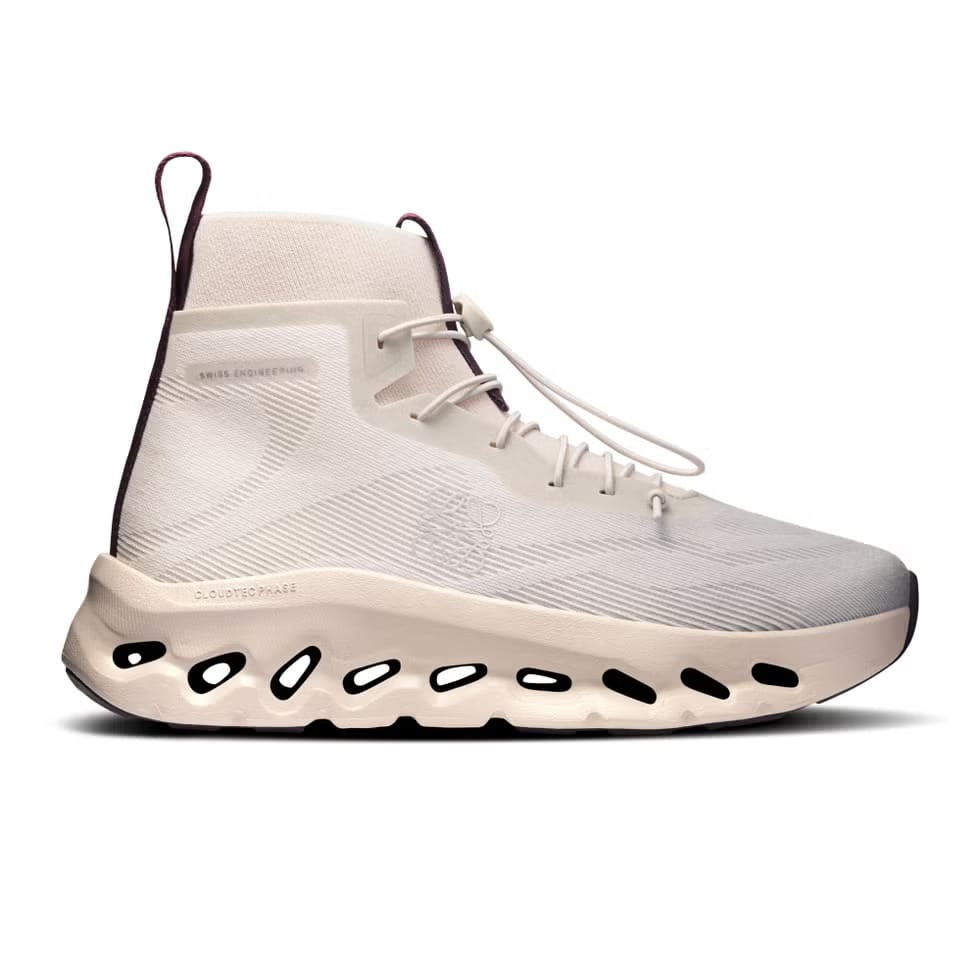
Loewe and On have extended their footwear collaboration with the LightSpray Cloudmonster, a $990 laceless runner that pairs the Spanish house's design language with On's sprayed-on filament upper. The shoe is built in roughly three minutes using a robotic process that lays down a single seamless upper, eliminating cut-and-sew construction and bringing the total component count down to eight pieces at a weight of 190g.
It arrives in an all-white colourway with three swappable LightSpray socks in fluoro yellow, green and teal, designed so the sock colour shifts the visual identity of the otherwise translucent shoe. The Cloudmonster sits at the top of a nine-pair drop that also includes new Cloudsolo colourways at $750 and a hi-top Cloudtilt at $650, with the headline silhouette restricted to On and Loewe stores. The release coincides with On's first earnings call as a standalone reporter, on which co-founder Caspar Coppetti said the brand had scaled LightSpray production capacity thirty-fold at its Busan factory in February, and that LightSpray accounted for close to 20 percent of footwear net sales in the opening week of On's new Boston store.
Why it matters: LightSpray is one of the most interesting things happening in volume footwear manufacturing right now, and the Loewe collaboration is doing two jobs at once. Commercially, it gives the technology a luxury price ceiling - $990 for a running shoe sets a price point that lets On charge a premium when LightSpray, in-theory, scales.
Operationally, the thirty-fold capacity ramp and the Boston store data suggest On is no longer treating sprayed-on uppers as a marketing exercise. A laceless eight-piece construction made in three minutes by a robot lays down a challenge to how performance footwear has been built for fifty years, with obvious implications for labour, nearshoring and the carbon footprint of a category that ships hundreds of millions of pairs a year.

Zalando Hits 45,000-SKU Target for 3D Product Twins With ALLSIDES
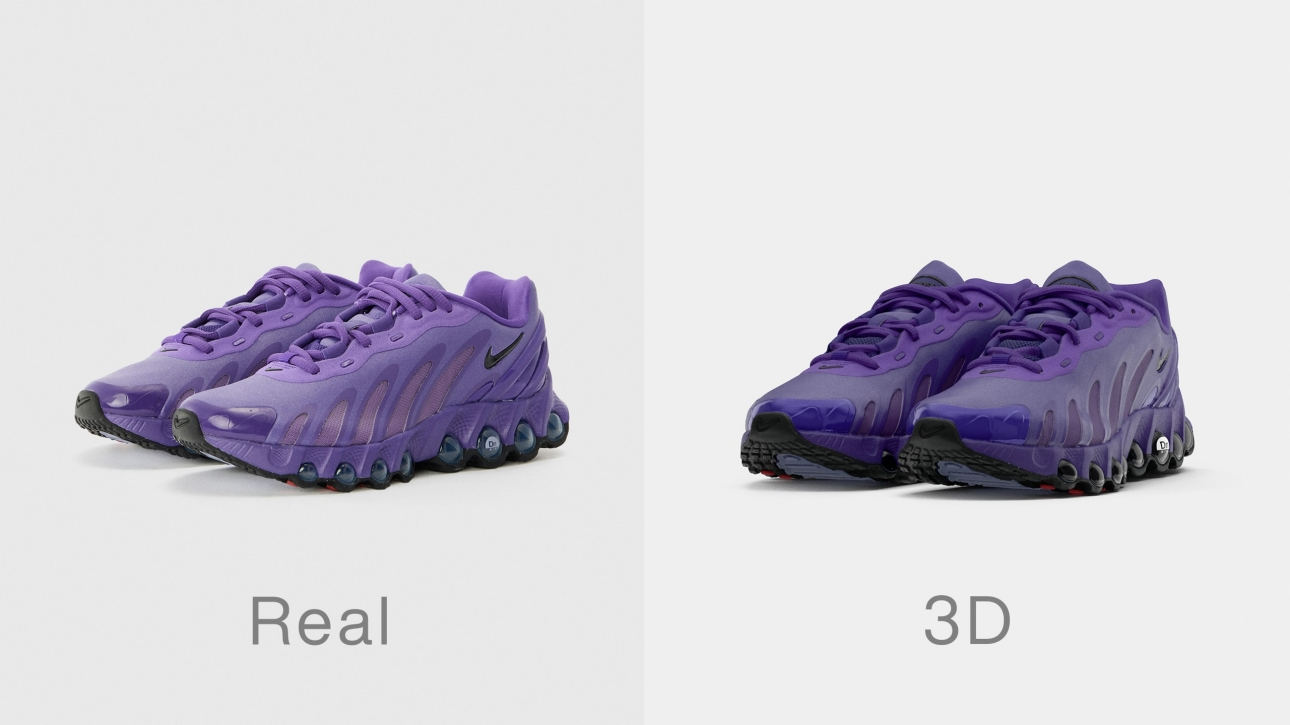
Zalando has scaled its 3D digital twin programme with Berlin scanning startup ALLSIDES, building an Nvidia-accelerated pipeline that turns physical footwear into reusable 3D assets in roughly seven minutes per scan. The retailer produced 10,000 3D footwear SKUs between April and December 2025 and is targeting a further 35,000 in 2026, for a running total of 45,000. Each scan is captured on ALLSIDES' photometric rigs and reconstructed on Nvidia RTX 6000 Ada and RTX PRO Blackwell GPUs using CUDA, OptiX-based differentiable ray tracing, and Nvidia's Cosmos, Gen-3C and DiffusionRenderer models, which generate camera-controlled videos and material-aware relighting from a single capture.
The resulting digital twins flow into Zalando's ShopAR platform and are reused across product detail pages, AR virtual try-on, marketing video, packshots and lifestyle imagery, replacing what used to require multiple studio shoots. According to figures shared in the Nvidia case study, the pipeline cuts cost per scan by up to 92.1%, runs 99.4% faster than traditional methods, and delivers a 3–4% uplift in add-to-cart rates for enhanced product pages, with notable return reductions in footwear and 15–20% more time spent on pages featuring 3D and video content.
Why it matters: This is one of the clearest examples to date of a marketplace operationalising 3D as production infrastructure rather than a flagship pilot. The interesting numbers aren't the engagement uplifts, those are roughly in line with what every 3D vendor has been claiming for a decade, but the unit economics and throughput. Seven-minute capture, 92% cost reduction, and a clear path to 45,000 SKUs is the point at which 3D stops being a hero-product capability and starts behaving like a content pipeline.
It also makes the brand-partner economics work: Zalando is now offering ShopAR as a B2B service, which turns its scanning infrastructure into a revenue-bearing layer of the platform rather than a cost centre. The broader observation is that the digital product passport conversation, virtual try-on, AI-generated marketing video and physical AI training data are all converging on the same underlying asset - the high-fidelity digital twin - and the players who industrialise that capture-step first will set the standard everyone else has to interoperate with. Zalando's last earnings call leaned heavily on its AI engine; this is the content-side complement, and it's a much more defensible moat than another recommendation model.
Smartglasses Turn the Luxury Boutique Into a POV Content Set
A growing genre of covertly filmed point-of-view videos shot inside ultra-luxury boutiques is going viral on TikTok and Instagram, with BoF reporting (paywalled) that brands from Gucci to Patek Philippe are facing a new kind of reputational risk as Meta Ray-Bans give content creators a discreet capture device that sits somewhere between a GoPro and a hidden camera. The videos show what was previously the most stage-managed environment in retail - the high-end salon visit, the watch reveal, the sales associate body language - from the customer's own eyeline, with sound.
They're popular precisely because the territory has historically been closed: consumers who will never walk into a Patek boutique can now watch one being walked through in first person. The hardware is the EssilorLuxottica-Meta partnership product line, which has scaled fast on the back of AI features layered into successive Ray-Ban and Oakley releases and is now mainstream enough that staff have no reliable way to identify a creator from a customer. The pieces highlight an obvious tension: the same wearables industry luxury has been investing in as a retail-tech opportunity has produced a consumer device that fundamentally alters who controls the narrative inside a flagship.
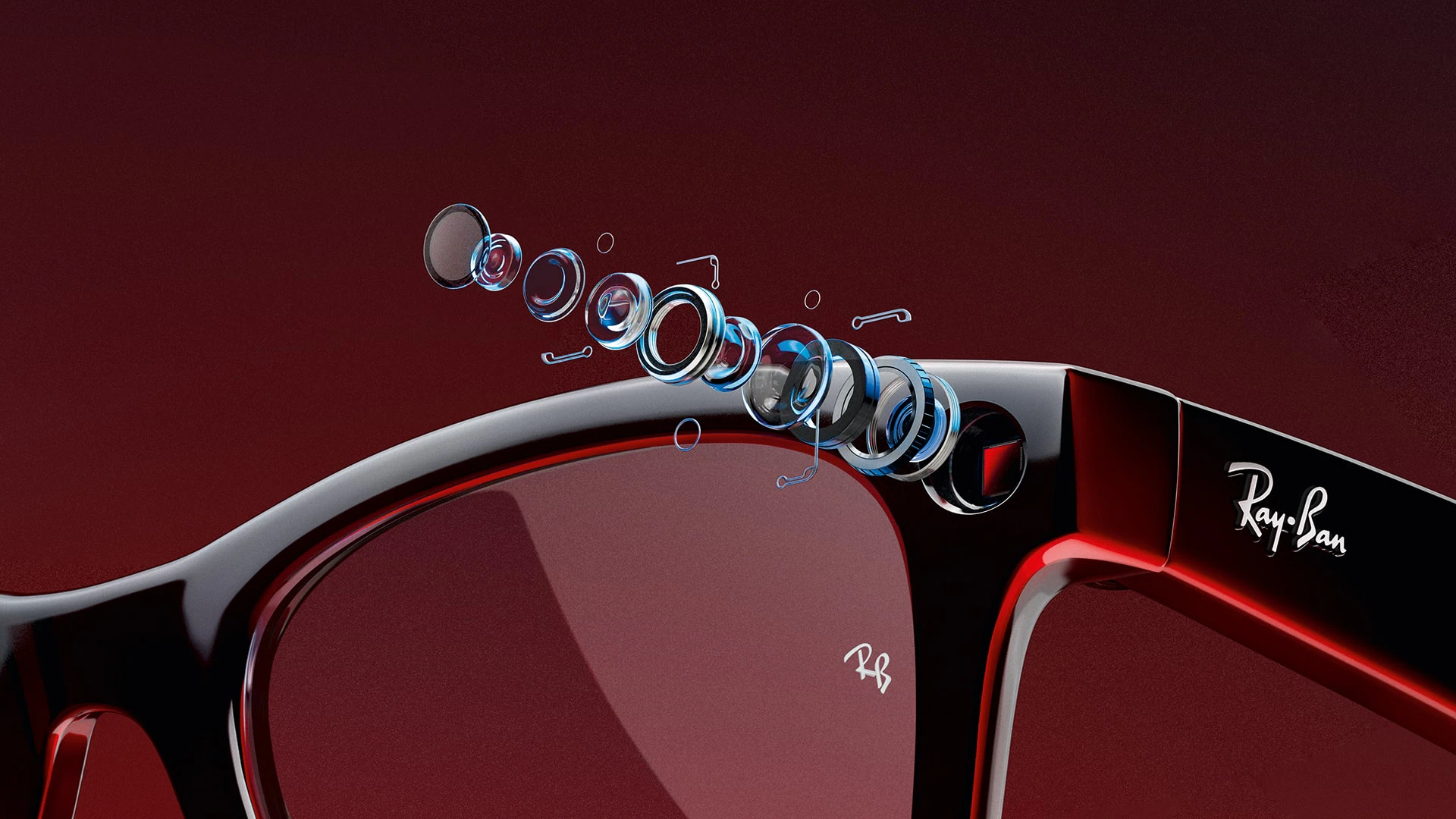
Why it matters: The luxury boutique has spent thirty years being designed as a brand asset - the lighting, the music, the choreography of the sales associate, the deliberate scarcity of stock on the floor - and the implicit contract has always been that this experience exists for the customer in the room, not for an audience of millions. Smartglasses break that contract silently. Unlike a phone held up at chest height, a Ray-Ban Meta is indistinguishable from any other pair of sunglasses worn indoors, and there is currently no in-store policy, sign or staff training that meaningfully addresses it.
The deeper question is who owns the narrative of the luxury experience now that the customer can publish it in real time, and what that does to the value of scarcity itself. There's also a useful counter-take: the same videos are some of the most authentic luxury marketing the category has ever had, revealing a level of unboxed reality that brand-produced content can't manufacture. Expect a wave of policy responses - explicit no-recording signage, device checks at the door, glasses-off requests at the salon - and a slower, more interesting wave of brands that decide to lean in and treat the POV economy as a discovery channel rather than a threat. Either way, retail design teams have a new variable to plan around, and most of them weren't planning for it.