


eBay Closes Depop at $1.4bn, Below What Etsy Paid for It
eBay has completed its acquisition of Depop from Etsy, with Etsy confirming total consideration of approximately $1.4bn in cash - a $1.2bn purchase price plus around $200m in net purchase price adjustments and interest, subject to post-closing adjustment. Etsy bought Depop in 2021 for $1.625bn. The deal was agreed on 18 February and closed on 30 July following clearance from the UK's Competition and Markets Authority, which had escalated its review to a formal merger investigation in June.
Depop turned over roughly $1bn in gross merchandise sales in 2025 with close to 60 per cent year-on-year growth in the US, and held seven million active buyers and more than three million active sellers as of 31 December, with nearly 90 per cent of buyers under 34. It joins an eBay fashion category already running above $10bn in annual GMV, against total platform volume of around $80bn. Peter Semple stays on as Depop chief executive and the marketplace keeps its own brand, platform and product experience. For Etsy it is the third marketplace disposal in short order, after Reverb and Elo7.
 Renan Botelho de Carvalho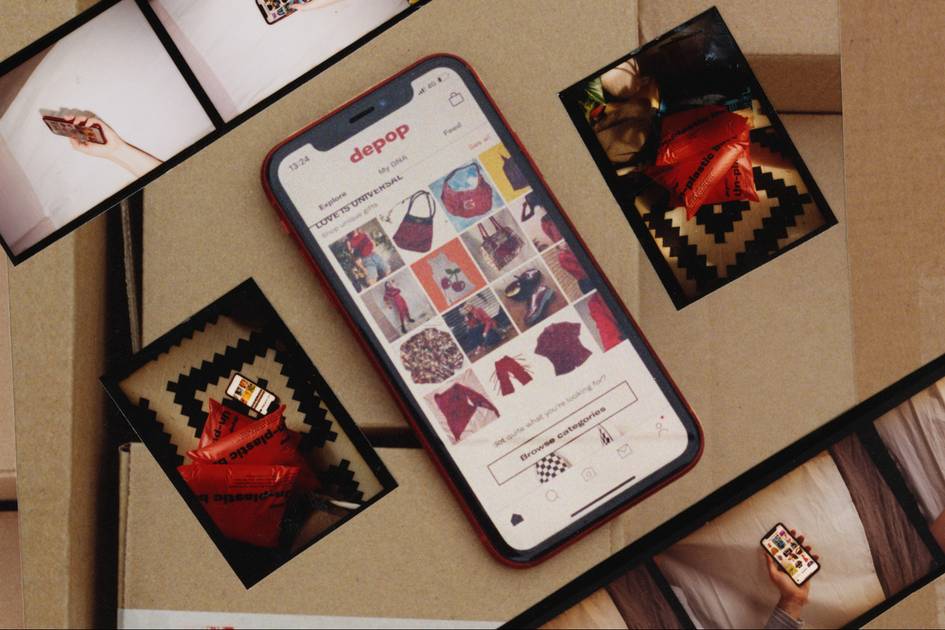
Why it matters: A marketplace growing 60 per cent in its largest expansion market sold for less than it cost five years ago, which says less about Depop's trajectory than about how badly the marketplace roll-up thesis has aged - Etsy has now unwound the entire house-of-brands structure and gone back to one asset.
What eBay is buying is not really Gen Z reach, which it could have bought advertising against; it is a supply pool of low-price fashion inventory and three million sellers it can eventually run over its own payments, authentication and cross-listing rails. That is the real economics of resale consolidation: trust and logistics infrastructure is expensive to build for a single category and cheap to amortise across several, which is why standalone resale platforms keep ending up inside general marketplaces rather than beside them.
The risk is the same one Etsy failed to manage, and it is a product risk rather than a financial one - Depop's asset is a community layer with its own vocabulary and behaviour, and integration work that improves unit economics tends to erode exactly that. Watch what happens to seller fees first; it is usually the earliest visible sign of which side of that trade-off the parent has chosen.
Daydream Licenses Its Search Stack to the Brands It Was Competing With
Daydream, the AI fashion search platform founded by Julie Bornstein, has opened its natural-language search technology to third-party retailers under a programme called 'Powered by Daydream'. STAUD, Alice + Olivia, Couper, Cult Mia and Hampden Clothing are live on the initial pilot, with more than 25 further signings named, including Anine Bing, Mansur Gavriel, ba&sh, Sandro, Maje and Ramy Brook.
The product sits on top of a retailer's existing catalogue and site infrastructure, interpreting descriptive queries - cut, drape, silhouette, occasion, price point - and returning results from that retailer's own assortment rather than Daydream's marketplace. Daydream handles the integration work.
Bornstein's framing is blunt: "Search has never been a strong suit on most fashion sites," tied as it is to internal taxonomies rather than customer vocabulary. The company exited beta this year and reports 1.5 million shoppers across a catalogue of 325 retailers, 10,000 brands and three million products, all figures self-reported and all describing the consumer destination rather than the licensed product.
 Daydream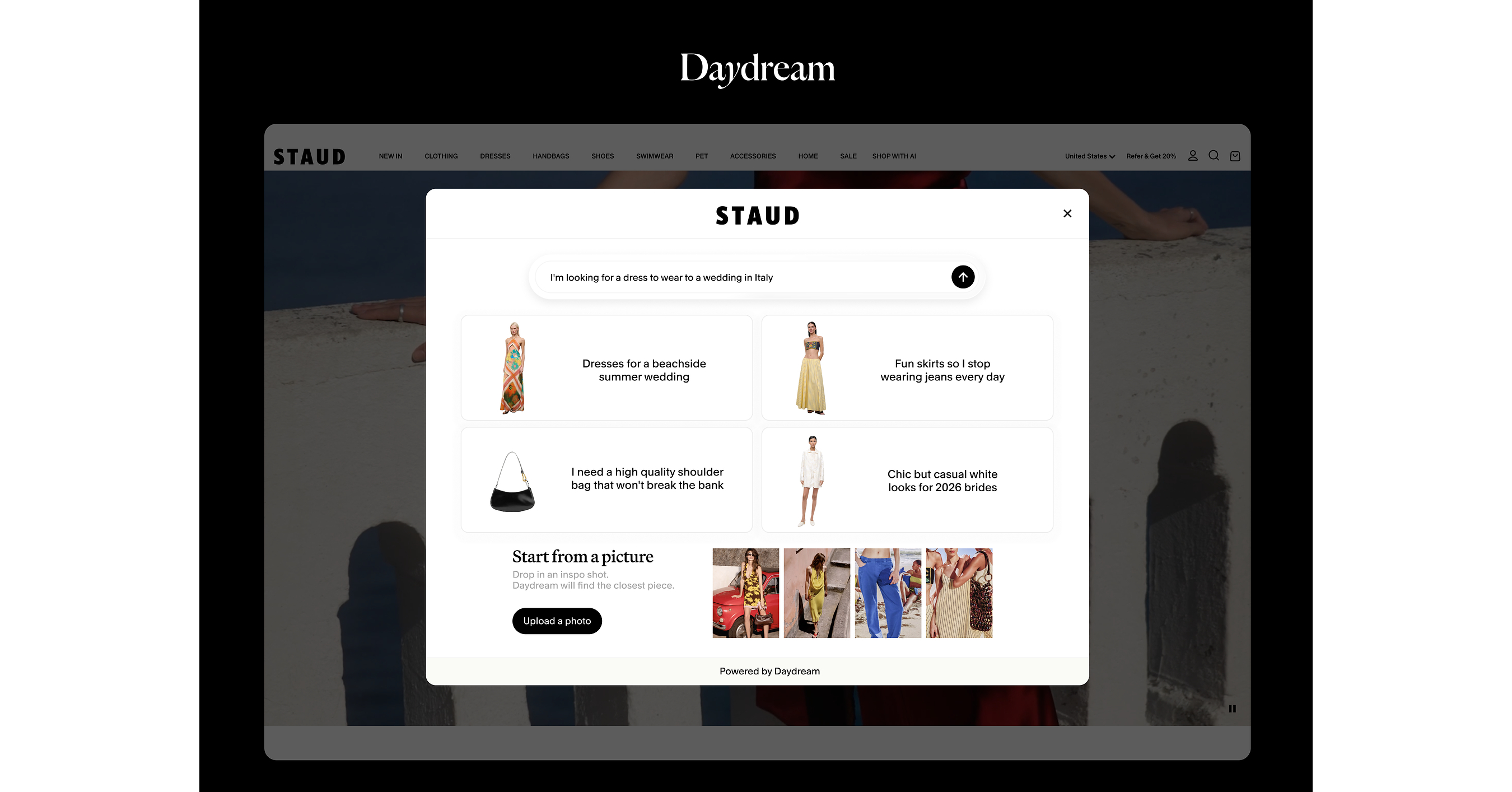
Why it matters: Bornstein raised $50m in 2024 to build a fashion search destination; two years on, she is selling the engine to the retailers that destination was meant to disintermediate. That is a sensible read of where the money is, not a retreat - owning the search layer across thirty storefronts is a more defensible position than competing for traffic against ChatGPT and Google. It also lands on the right side of the scenario we saw play out at Walmart, where in-chat checkout underperformed and the sale stayed with the brand: Daydream is explicitly letting retailers keep the customer, the data relationship and the transaction, and charging for the interpretation layer instead.
THG Puts Its Try-On Agent on Google's Shelf and Cites Its Own Brand as Proof
THG Ingenuity has listed its AI Stylist virtual try-on product on Google Cloud Marketplace, making it available to retailers as a packaged agent rather than a bespoke integration. The tool was built with Google Cloud and runs on the Gemini Enterprise Agent Platform, the agentic stack Google has been selling into retail since NRF in January. Shoppers upload a photo on the product page and see a generated image of themselves in the garment.
The performance figures come from MP Activewear, the apparel line THG spun out of its Myprotein business in 2025 and still owns: among UK shoppers who generated at least one image, conversion ran close to six times the site average for activewear, time on site 6.3 times longer, and average order value 2.5 per cent higher. THG also says the tool significantly reduces returns but has published no figure for it, which is the number any fashion retailer would actually be buying on. Jo Drake, chief technology officer for platform at THG Ingenuity, frames the marketplace listing as a route to reaching brands globally.
 Tom Bottomley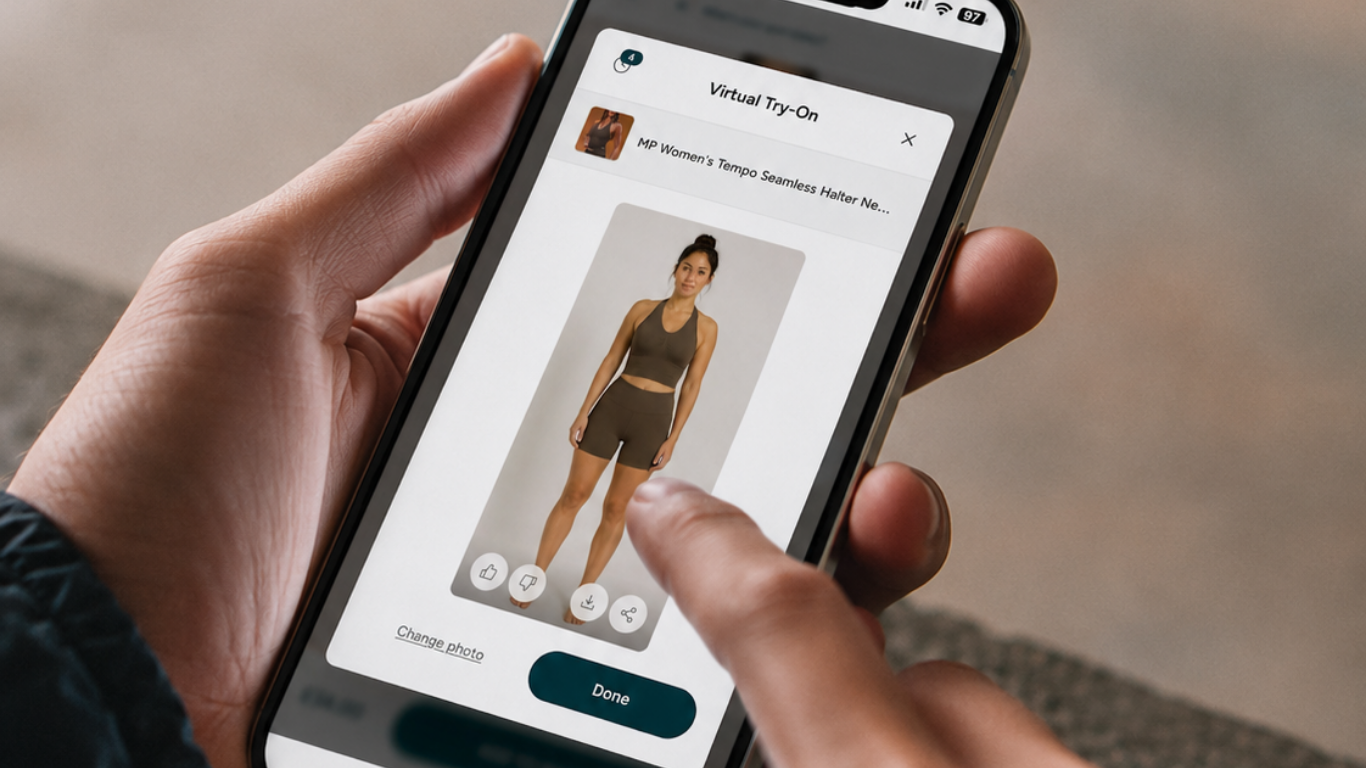
Why it matters: AI Stylist generates an image of the garment on you; it does not measure whether the garment fits you. Those are different products sold under the same name, and only one of them touches returns - which is presumably why THG claims a returns benefit and publishes a number for everything except returns. A generated image that flatters is a conversion tool with a delayed cost: the customer buys with confidence, the parcel arrives, and the gap between the render and the mirror comes back as a return with a disappointed customer attached.
Note also where it was proven. MP Activewear is stretch fabric, the single most fit-tolerant category in apparel and the one where a plausible-looking image is least likely to be contradicted by the actual garment; the test that matters is tailoring or denim, where three centimetres is meaningful. Until someone runs this against a holdout in a rigid-fabric category, six times conversion is a number about browsing, not about fit.