


Fraudulent Retail Sites Are Appearing in ChatGPT Search Results
Cloned websites impersonating Russell & Bromley and Dunelm have been appearing in ChatGPT search results, according to scam-detection service Ask Silver, which reported the findings to The Guardian. The Industry's own investigation found a further fraudulent Russell & Bromley site - russellbromleyservices.com - promoted via ChatGPT, offering steep discounts and falsely claiming certified security status.
Anna Jones of Ask Silver suggested the underlying language models may have been "poisoned" with malicious content, and pointed to a specific vulnerability: Russell & Bromley's official website was taken offline after the brand entered administration in January 2026, before being acquired by NEXT in a pre-pack deal for £2.5m. Consumers searching for the brand may not know it now operates within NEXT's website, leaving them exposed to convincing clones. ChatGPT's told The Guardian it had removed the fraudulent sites from its search index after being notified.
 Camilla Rydzek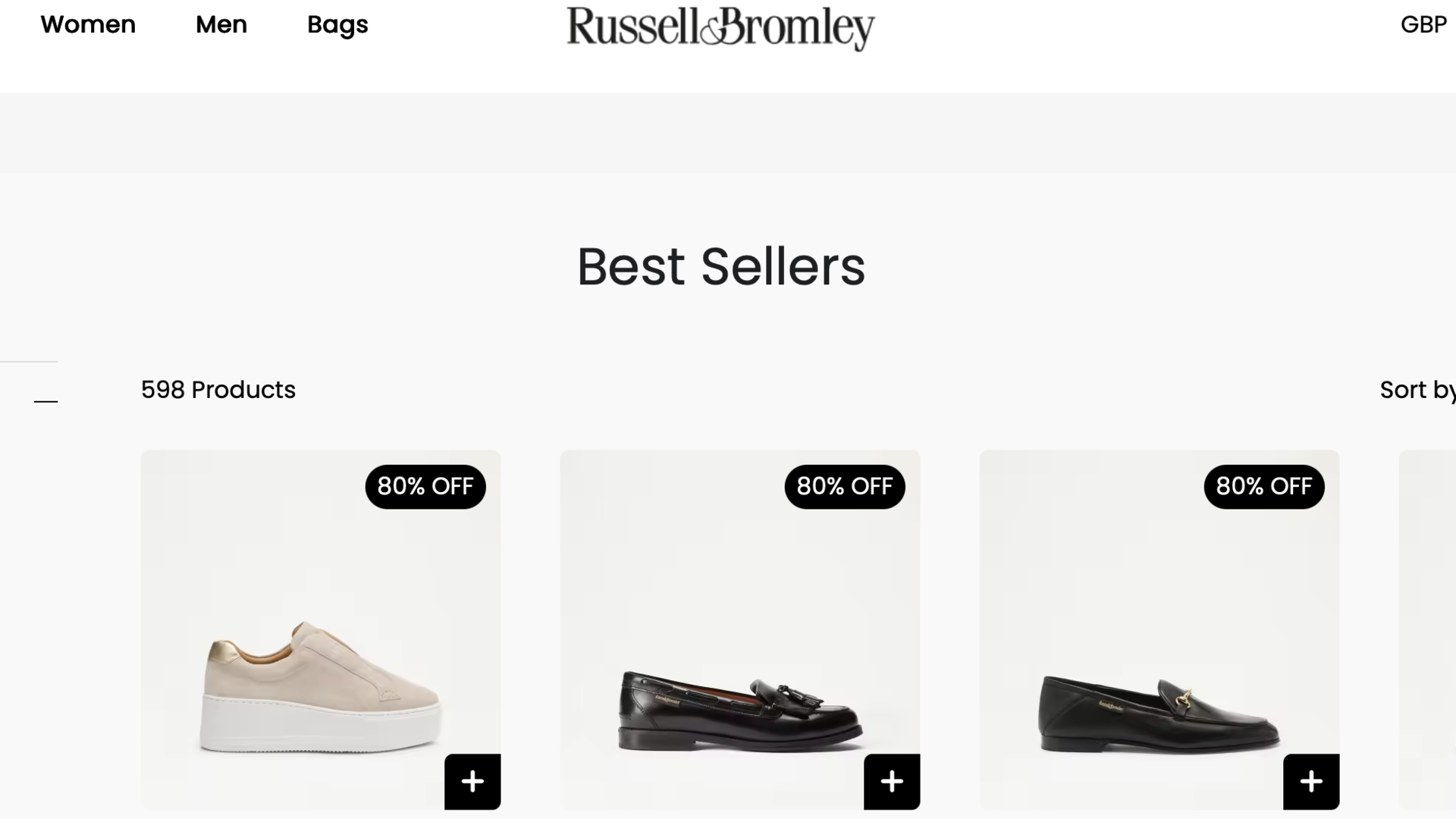
Why it matters: This is a concrete illustration of the brand safety gap that opens when AI platforms become primary shopping interfaces. Generative search is not subject to the same quality controls as traditional web indexing, and the Russell & Bromley case reveals a specific attack vector: brands that have gone through administration, been acquired, or changed their digital footprint are particularly exposed, because the web's information about them is in flux at exactly the moment fraudsters move in.
OpenAI's response, removing sites once notified, is reactive, not preventive, and the onus on brands to monitor and report is significant. For any retailer investing in AI-driven customer acquisition, this week's story is a reminder that the same channels creating discovery opportunity are also creating new fraud surfaces, and that brand reputation in AI search is not yet something any platform can guarantee.
The Coming Battle Over Retail Product Data
A interesting analysis piece from The Interline this week sets out the structural tension now building across fashion commerce infrastructure: a growing cohort of AI shopping platforms, from well-funded startups to established tech giants, are architecting discovery and transaction flows that depend on freely available SKU-level data, while the brands and retailers who own that data are developing increasingly strong reasons to lock it away. The piece arrives alongside a YouGov survey finding that just 6% of US clothing shoppers currently use chatbots to discover new brands or products, even as a DHL ecommerce report shows 83% of fashion sellers either use or plan to use AI for personalisation.
Into that gap, a new startup called The Mall launched this week promising a universal shopping feed built on high-frequency scraping of retail catalogues and pricing data, with no brand partnerships involved. The same model, The Interline notes, almost certainly underlies Hey Savi, which powers the Debenhams Group's widely reported "agentic commerce" integration and claims to search more than 10,000 brands. The tension is sharpening in parallel sectors: Strava moved this week to restrict automated traffic ahead of its IPO, and UK publishers made progress in their efforts to opt out of Google's AI overview scraping.
 The Interline
Why it matters: The article highlights a decision that every brand and retailer with meaningful digital inventory will soon have to make explicitly: do you allow your catalogue data to remain available to third-party AI platforms, or do you wall it off and own your AI commerce relationships directly?
The Interline's most pointed observation is the Amazon case, a company that now uses generative visual search across multi-brand data, and which has a long history of converting aggregated market intelligence into private-label competition. That is not an abstract threat. Brands that watched Amazon use marketplace data to undercut them on product are now watching the same dynamic play out in AI discovery. The scraping model is not illegal, but it is extractive, and as hosting providers begin offering turnkey bot-blocking tools, the calculus for participation is shifting. Venture-backed platforms with no API relationships and no direct brand deals face a genuine existential question if major retailers start switching that traffic off.

Prada Designs the Inner Layer for NASA's Artemis IV Spacesuit
Prada and Axiom Space unveiled the Liquid Cooling and Ventilation Garment (LCVG) - the inner layer of the AxEMU spacesuit to be worn on NASA's Artemis IV lunar mission - at Prada's SoHo flagship in New York.
The garment was developed using 3D modelling to optimise thermal regulation and ventilation across up to eight-hour spacewalks, drawing on Prada's expertise in precision knitting and technical fabric sourcing. Pending NASA approval, astronauts will first wear and test the suits at the International Space Station before the Artemis IV mission, which is targeting the moon's South Pole in 2027.
Prada first announced the Axiom partnership in October 2023 and presented the outer suit at the International Astronautical Congress in Milan the following year. Lorenzo Bertelli, Prada Group's CMO and head of sustainability, attributed Axiom's choice of Prada partly to the brand's end-to-end vertical integration: the same supply chain control that goes into a luxury handbag, applied to garments with zero tolerance for fault. Bertelli noted that each bespoke spacesuit requires around 500 hours of manufacture, roughly a third of the time Prada invests in its most complex couture pieces.
 Kanika Talwar
Why it matters: Spacesuit collaborations are not new territory for fashion. Raf Simons dressed a NASA astronaut in 2019, and the crossover has a lineage stretching back to Courrèges and Cardin in the 1960s. What's different here is the depth of the technical brief. This is not a surface-level branding exercise: Prada's materials and manufacturing teams have spent three years developing garments that must perform in vacuum conditions, manage body heat across multi-hour missions, and pass NASA certification.
The LCVG is explicitly functional, and the credibility of delivering on that brief is the point. For a luxury house navigating the awkward positioning questions of the mid-2020s, it is a more convincing proof of technical capability than almost any campaign could provide. Whether it generates commercial returns directly is beside the point; it banks innovation equity in a way that marketing cannot.
Zara Opens Tech-Enabled Flagship on London's Bond Street
Zara has reopened its Bond Street flagship at 333 Oxford Street following a full refurbishment, delivering 32,000 sq ft across four floors - the only central London store to unite Zara's womenswear, menswear and childrenswear under one roof. The store was designed by Inditex's in-house architecture team and integrates a package of omnichannel and automation features: automated online order collection and return drop-off points, real-time stock visibility through the Zara app, in-store inventory location, and a two-hour click-and-collect service. An automated clothes sorting and restocking system frees staff from back-of-house logistics to focus on the shop floor.
The reopening also includes a repair and recycling service, a leather personalisation offering, and limited-edition London-specific product lines across all three categories. Inditex reported Q1 2026 sales of €8.7bn, up 5.8% year-on-year, with gross profit rising 6.9%.
 Camilla Rydzek
Why it matters: Zara's flagship investment is worth reading carefully against the broader noise around physical retail reinvention. The store does not rely on a single headline technology or a concept that needs explaining - it is an accumulation of execution: RFID-enabled inventory accuracy, automated fulfilment infrastructure, integrated online and offline stock, and sustainability services built into the fabric of the operation. That combination allows Zara to run a premium Bond Street address at volume without sacrificing the operational efficiency that its model depends on.
For fashion tech vendors, this remains the test bench that matters: Inditex has the scale to stress-test everything, the in-house capability to build its own systems, and the commercial discipline to deploy only what works. The Bond Street store is not a concept store, it is the operational standard Inditex intends to roll out.