


Google Photos Turns Your Camera Roll Into a Closet
Google Photos has announced a new AI feature that automatically constructs a digital wardrobe from clothing items detected in a user's existing photo library, letting them mix and match pieces, save outfits to themed moodboards, and virtually try on combinations. Items are categorised by type - tops, bottoms, jewellery - and outfits can be shared with friends or organised by occasion such as travel, work, or events. The feature rolls out on Android later this summer under "Collections," with iOS to follow.
Google has not detailed how the underlying recognition model works, beyond confirming it parses items from photos already in the library. The launch enters a category populated by standalone apps including Whering, Acloset, Combyne, Pureple, and Alta - all of which have spent years building digital closet behaviour from scratch, typically requiring users to photograph each garment manually.
 Sarah Perez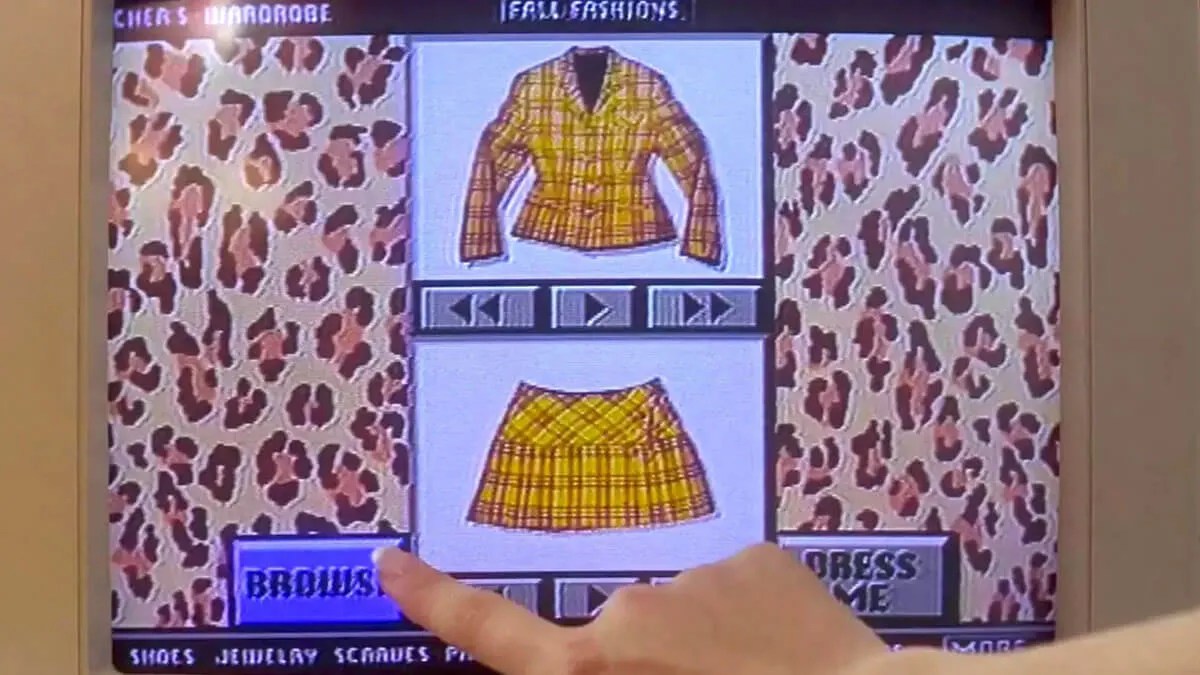
Why it matters: The digital wardrobe has been a niche category for a decade, held back by a single friction point: nobody wants to photograph every item they own. Google has just removed that friction by default. For a billion-plus Photos users, the wardrobe builds itself from images already taken.
That is an existential problem for the standalone closet apps, and a more interesting one for fashion brands. A populated digital wardrobe is the missing layer for genuinely personalised recommendations, gap analysis ("you own no white trainers"), and resale prompts, the kind of data fashion retailers have tried and largely failed to collect themselves through loyalty apps and order histories.
The question is whether Google opens this up. If the wardrobe stays locked inside Photos as a consumer feature, it's a cute Clueless tribute. If Google exposes it via API to retailers, or layers shopping integrations on top, it becomes the closest thing the industry has seen to a universal customer-owned style graph and a serious challenge to the virtual try-on and fit-tech vendors that brands have been integrating one-by-one. Worth watching what gets announced alongside the iOS rollout.

Bezos Earth Fund Commits $34M to Reinvent Fashion's Raw Materials
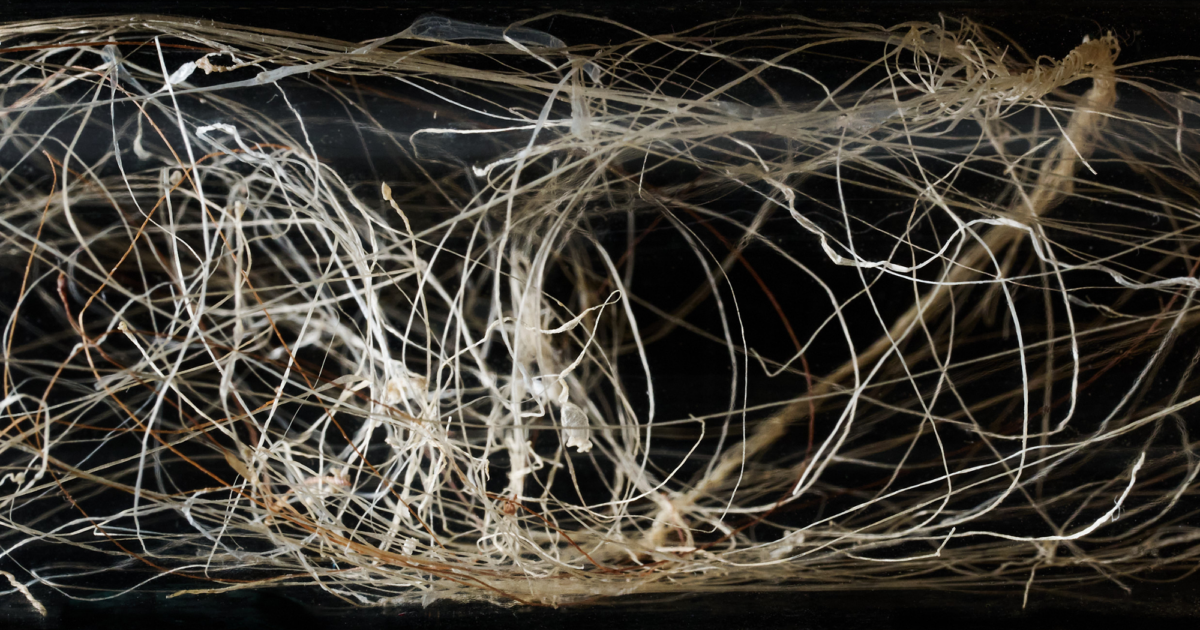
The Bezos Earth Fund has announced $34 million in new grants to develop next-generation textile fibres, targeting the materials layer where roughly 80% of fashion's environmental footprint sits. Columbia University, partnering with the Fashion Institute of Technology, receives $11.5 million to grow textile fibre from bacteria fed on agricultural waste through a programme called PRISM. UC Berkeley gets $10 million, alongside Stanford and Caltech, to develop a biodegradable spider-silk-inspired fibre without silkworms or plastic. Clemson University and the University of Georgia share $11 million to use gene editing and synthetic biology to engineer cotton with built-in colour, improved performance, and greater resilience. A further $1.5 million goes to the Cotton Foundation to restore a non-GMO cotton seedbank.
The grants build on the Earth Fund's 2025 entry into fashion via the $6.25 million CFDA Next Thread Initiative, and target fibres that match the cost, performance, and feel of rayon, silk, and cotton.
Why it matters: The volume of fashion sustainability announcements that focus on recycling, resale, or downstream waste obscures a simpler point: the fibre itself is where the damage is done, and almost no one is funding the basic science to change that. $34 million is not enough to reinvent an industry, but it is enough to push four serious research programmes past the bench-science stage.
The harder question is what happens next - bacterially grown fibre and gene-edited coloured cotton are interesting in a lab, but fashion has watched promising bio-materials stall at pilot scale for a decade because brands won't commit volume and manufacturers won't retool without it. Last week's H&M-backed Rubi deal on CO₂-to-fibre tech sits in the same territory, and the pattern is becoming clear: philanthropic and corporate capital is finally moving upstream into materials R&D, but the offtake commitments that would actually scale these fibres remain conspicuously absent. Which brands sign on as commercial partners over the next 18 months, not the grant size, will determine whether any of this reaches a shop floor.
Victoria Beckham Adds AI Twin Try-On as DressX Reports 10x Conversion Lift
Victoria Beckham has launched an AI-powered try-on experience with DressX, now live on the brand's website, that lets customers try selected garments either on a full-body photo or on a personalised "AI Twin" generated from a selfie. The tool combines photo and video try-on so shoppers can see pieces from multiple angles and in motion, and pairs the visual output with size recommendations generated from images and manual measurements. Kate Hurrell, head of e-commerce at Victoria Beckham, framed the partnership as a play to reduce sizing uncertainty and encourage more considered purchases.
DressX, led on the technical side by CTO Ivan Zaparovanny and co-founded by Natalia Modenova and Daria Shapovalova, says users who engage with virtual try-on convert at ten times the rate of those who don't, and show seven times higher long-term retention. The launch is part of a broader uptick in digital twin tooling across fashion, with Fairgen this week rolling out synthetic customer populations for market research and Catches having launched its physics-based RealFit platform last month with Amiri and Nvidia.
Arthur Zaczkiewicz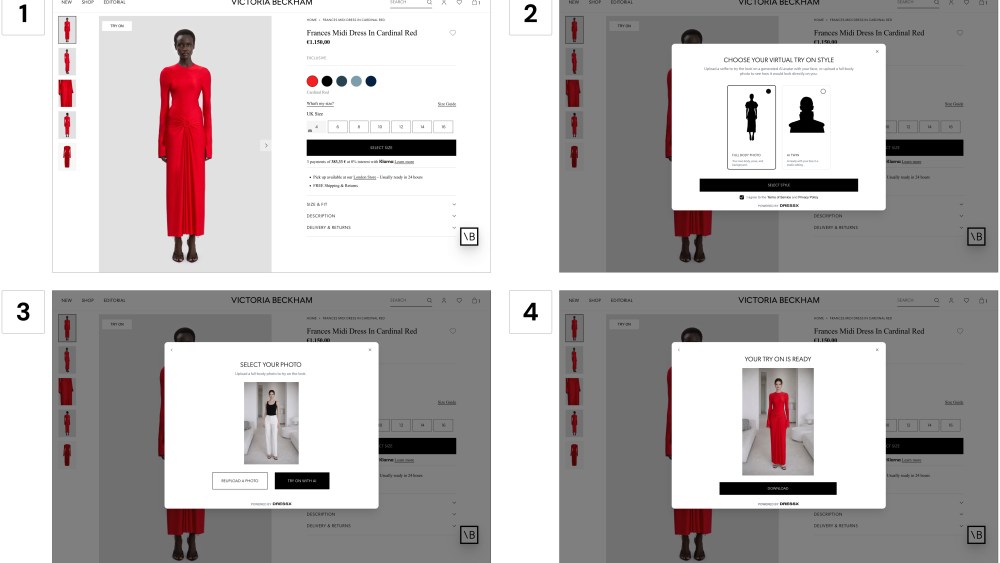
Why it matters: The conversion and retention numbers DressX is putting out are eye-catching, but they need treating with caution - they are vendor-reported, almost certainly skewed by self-selection (engaged shoppers are engaged shoppers), and a 10x lift over non-engaged users is not the same as a 10x lift on overall site conversion. That said, the strategic logic is sound: at Victoria Beckham's price point, the cost of a return (financial, operational, and reputational), is high enough that even modest accuracy gains on fit pay back quickly.
The more interesting question is what happens when these AI Twins compound. The Google Photos announcement of an auto-generated digital wardrobe and this Victoria Beckham launch are pointing at the same end-state: a customer-owned avatar that walks between brands carrying its measurements, style history, and fit preferences. Whoever owns that avatar layer - DressX, Catches, Google, or the brand itself - owns the next layer of fashion personalisation. For now, brands are buying point solutions one DTC site at a time, which is exactly how the recommendations market began before the platforms ate it.