


Meta's Muse Agent Launches in the UK With Asos, JD Sports and M&S
Meta's personal AI agent Muse launched in the UK on 24 November. Its fashion partners include Asos, JD Sports, Debenhams Group and Marks & Spencer. Lookfantastic, Myprotein, Currys, Argos, Sainsbury's and Ocado Retail are also connected, alongside travel brands including easyJet and Trainline. Muse runs on Muse Spark, the first model from Meta Superintelligence Labs.
UK adults can use it free on iOS, Android, WhatsApp and muse.ai, and there are paid plans for heavier use. With some partners, shoppers link their own account so Muse can reorder a regular shop or pull up a booking. On other partners' websites, the agent browses and completes tasks itself. Every purchase needs the user's approval and is paid through Stripe's Link or Shopify's Shop Pay, and the retailer still processes the transaction. Muse launched in the US in September. Meta changed its terms after talks with the UK competition regulator, and Amazon, which blocked the agent in September, is not among the partners.
 Renan Botelho de Carvalho

Why it matters: FTW covered Walmart dropping in-chat checkout after weak conversion. Muse is built differently. It drives the retailer's own website and leaves the transaction with the retailer, so the brand keeps the sale and the payment. What the brand loses is the browsing session, where merchandising, recommendations and add-on sales happen.
That costs Asos, whose model depends on discovery across a huge range, far more than it costs Sainsbury's with a repeat grocery order. Signing up early gives Asos some say in how agents read its catalogue. Amazon's refusal shows the opposite bet, that the shopper relationship is worth more than the extra traffic. Meta hasn't published any US conversion or order data, so for now the commercial case rests on app downloads.

RELEX Buys autone to Build a Fashion Planning Unit
RELEX Solutions, the Finnish retail planning software group, has acquired autone, a London-based AI inventory planning company built for fashion, luxury and lifestyle brands. Terms were not disclosed. autone was founded in 2021 by people who had worked inside luxury houses and is led by CEO Adil Bouhdadi.
It forecasts demand by product, store, size and colour, using product attributes and comparisons with past collections, and feeds those forecasts into buying, allocation and replenishment decisions. Customers include Galeries Lafayette's jewellery division, IKKS, Vilebrequin, Roberto Cavalli, The Kooples and Sunspel. autone will form the core of a new RELEX Lifestyle business unit covering fashion, sports and lifestyle retail.
RELEX cites one French luxury leather goods client that cut inventory rebalancing from two and a half days to two hours and grew revenue by 10%.


Why it matters: RELEX's recent acquisitions have deepened its grocery and manufacturing planning, and fashion is the next logical step. Seasonal ranges are hard to plan with tools built for continuous lines. Most products are new each season, there's no sales history for the exact item, and the buy is committed months before demand shows up. autone was built for that problem by people who worked inside luxury houses.
On RELEX's platform, it gives fashion retailers one system that runs from pre-season buying through in-season rebalancing and replenishment. Intersport France, already a RELEX customer, will be an early test of that combination across a large sports and fashion business. Many brands still run separate tools for seasonal and continuous ranges, and one platform covering both gives them a concrete reason to review their planning setup.
Smartex Launches AI Fabric Inspection With H&M as Launch Customer
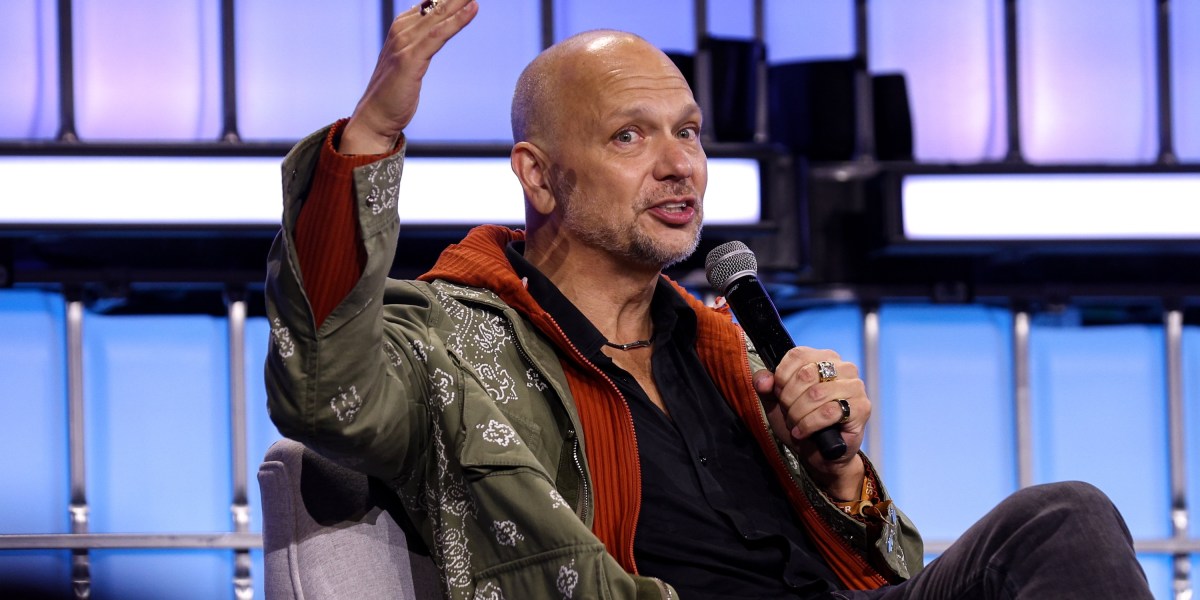
Porto-based Smartex has launched two new products, with H&M Group among its first customers. It has also named Tony Fadell, the iPod and iPhone co-designer, as chair. Smartex Inspect is a camera system that attaches to existing textile machines and checks fabric for defects as it runs past. The company says it works three times faster than a human inspector.
Smartex IQ turns the machine data into supply chain reporting for brands. Fadell has invested about $10m in the company, and his Build Collective fund co-led its $24.7m Series A in 2022, a round H&M also joined. CEO Max Easton told Fortune that brands typically order about 5% extra fabric to cover defects, and that cutting the surplus could save H&M about $100m a year. Smartex has around 800 earlier-generation systems installed across 10 countries.
 Jim Edwards
Why it matters: The $100m comes from Smartex's CEO, not from H&M, so treat it as a sales pitch. The logic behind it holds up, though. In most mills, inspection still means a worker watching a roll go past, and the 5% surplus is a cost brands pay on every order because they can't see quality upstream. Once inspection data reaches the brand, that buffer becomes something to negotiate, and so does the question of who pays for defects.
Smartex IQ matters more than the camera for that reason. H&M is an investor as well as a customer, so the real test is whether brands with no stake in Smartex sign up.
Fermat Raises $8m and Moves From Design Visuals to Tech Packs
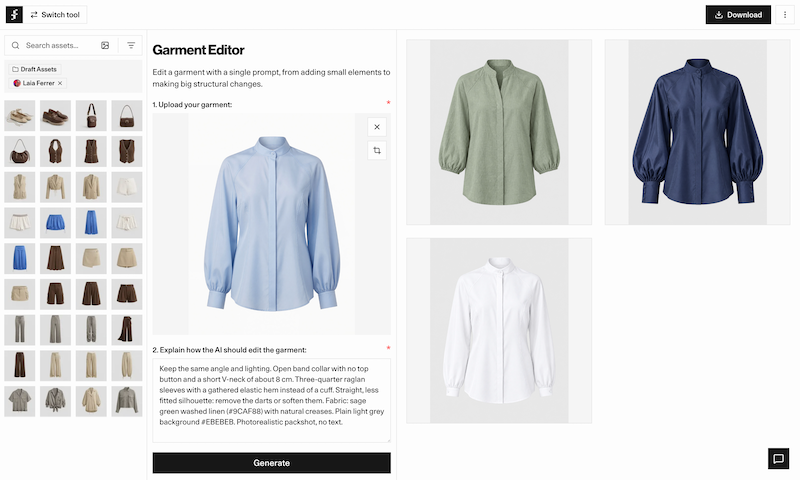
Barcelona-based Fermat has raised $8m in seed funding led by Kibo Ventures and Lunar Ventures, with PROfounders Capital, Masia Ventures and Betaworks among the other investors. Pol Baladas and Oscar Cuatrecasas founded Fermat in 2022. Its fashion-trained generative AI lets design teams turn sketches and moodboards into garment visuals and test fabric and colour variations before sampling.
Alongside the round it launched Techpacks, which converts designs into factory-ready specifications, including technical flats, construction details, measurements and bills of materials. Fermat reports more than 350 customers in 14 countries, among them Asos, J.Crew Group, New Look, s.Oliver and Tendam, with over 2,000 designers using it every week. Revenue has tripled since January and the US already accounts for a third of it. The money will fund a New York office.
 Scott Thompson
Why it matters: Image generation for designers is a crowded market and getting cheaper, and a tool that stops at the visual is easy to replace. The tech pack is where design turns into cost. Factories quote against it, and most of the back-and-forth between brand and supplier happens over it. Generating it from the design file moves Fermat deeper into product development. Switching costs are higher there, and the competition is PLM vendors rather than other image tools.
Everful Raises $48.5m for AI Agents That Source From Chinese Factories
Everful, founded in 2024 by former Alibaba executive Sisi Song and Kevin Han, has raised a $48.5m Series A led by Vertex Ventures Southeast Asia & India and January Capital. Square Peg and Lightspeed also took part. The San Francisco and Singapore-based company works as the sourcing team for smaller retailers and brands that don't have one. Its AI agents spot trending products, find and vet factories and handle communication through each order, and Everful manages fulfilment through to delivery.
It says it works with more than 30,000 vetted factories and ships over 5m pieces a month to customers in more than 60 countries. It expects to reach $100m in annualised revenue by year end with about 70 staff. Apparel, footwear and accessories sit alongside home, beauty and office supplies in its catalogue. The US is its largest market, and the new money goes into growth there and in Europe.
 Scott Thompson
Why it matters: Everful's pitch is factory prices for brands with no sourcing team, with Everful carrying the supplier risk. Every figure comes from the company, no customers are named, and the $100m is a year-end target rather than a reported number. Its exposure is easy to see: the US is its biggest market and every order ships from China, so tariff changes hit it directly. Set beside Smartex, it shows two answers to the same problem of factory quality. Smartex puts inspection data in front of the buyer. Everful asks the buyer to trust an intermediary to do the checking.