


Google Launches Universal Cart as Walmart Opens Its Doors to AI Agents
Google has rolled out Universal Cart to US users across Search and the Gemini app, after first previewing the tool at Google I/O in May. Shoppers add products from multiple retailers to one cart, get updates on pricing and inventory changes, and see savings based on the perks of cards saved in Google Wallet. Checkout runs through Google Pay, or shoppers can transfer items directly to a supported merchant’s own cart.
Named partners include Nike, Sephora, Target, Ulta Beauty, Walmart, Wayfair and many Shopify merchants, and the merchant remains seller of record. Six days later, Walmart CEO John Furner announced new tools at the Masters of Scale Summit letting third-party AI agents search for products and buy on customers’ behalf. At the centre is Walmart Agent Gateway, an MCP-based server letting approved agents, including ChatGPT, Gemini and Meta’s Muse, connect to Walmart and Sam’s Club inventory. Amazon cut Muse off from Amazon.com on 20 September.
 Lauren Forristal
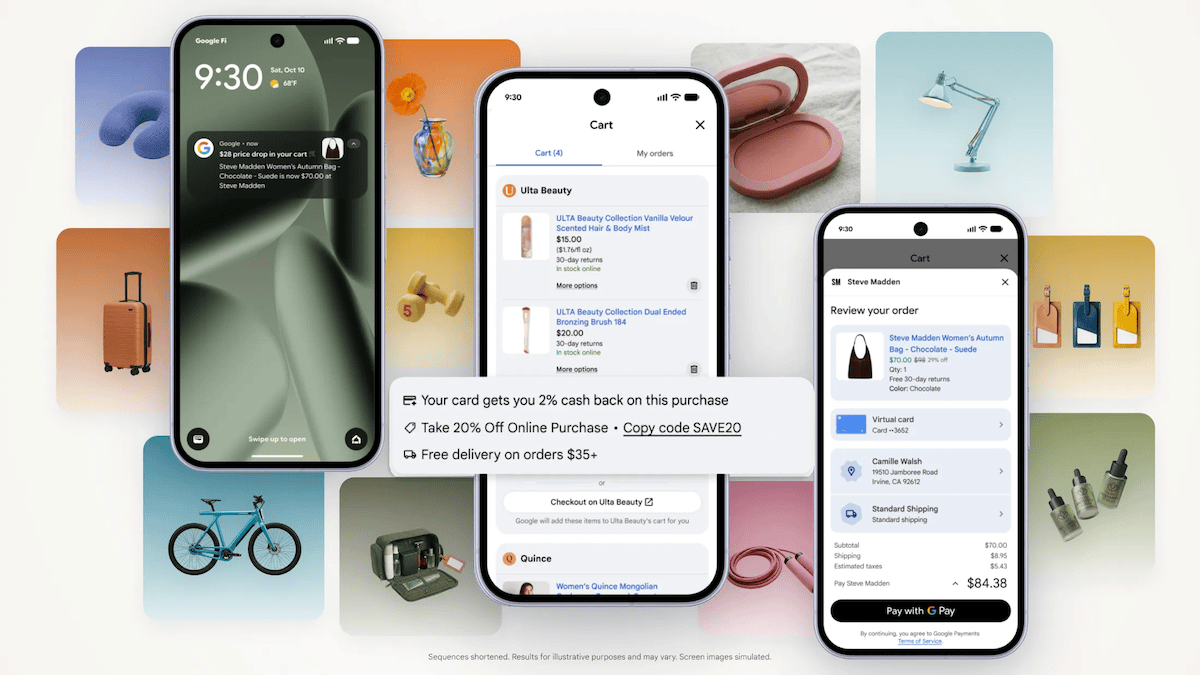
Why it matters: Google’s insistence that the retailer remains the seller keeps fulfilment, returns and customer service with the retailer. The cart, the price alert and the promo code sit with Google, and those are the moments when a shopper chooses between two stores. Access is gated too. Merchants must implement UCP capabilities such as the Cart API, apply through Merchant Center and wait to be selected.
Walmart has taken the opposite stance: let every agent in, on Walmart’s terms. Earlier this year Walmart dropped in-chat checkout after weak conversion, and Agent Gateway looks like the corrected strategy, bringing agents to its inventory instead of exporting its checkout into theirs. Fashion brands without Walmart’s scale won’t set terms. Gap moved first into Gemini checkout in March. Everyone else now chooses between feeding Google’s cart on Google’s rules and hoping agents come looking for them.

Footasylum’s AutoStore Doubles Output in THG Fulfil’s First External Build
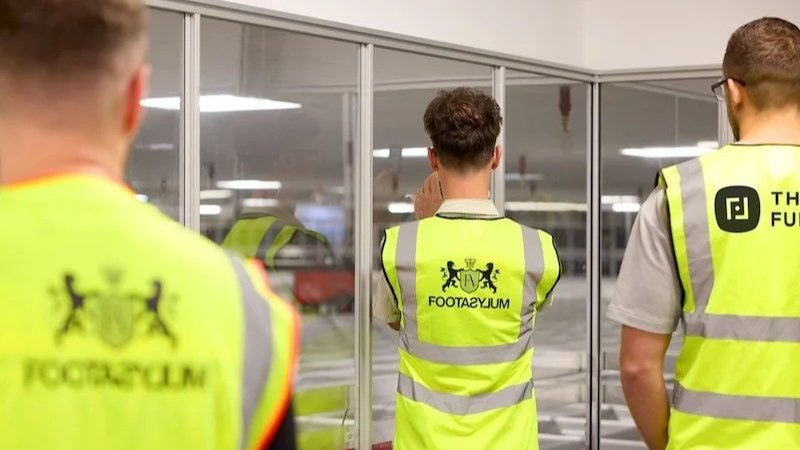
THG Fulfil has published the first results from the AutoStore system it built for Footasylum, the UK streetwear and sportswear retailer. The grid processed its first customer order on 28 August and went fully live on 14 September, two months ahead of the original plan, with under six months between contract signature and first order. THG Fulfil says the operation now delivers 212% of the output of Footasylum’s previous operation from fewer than half the picking stations.
The build uses 85 AutoStore R5 robots across 96,000 bin locations, holds Footasylum’s entire live SKU range and reports 99.8% uptime. Before construction, the two teams ran 80,000 simulations on Footasylum’s order history, seasonal demand and product data to size the robot fleet and ports. The system runs on THG Fulfil’s own warehouse control software, developed over five years inside its AutoStore network, under a hybrid deal mixing capital investment with robotics-as-a-service.
Why it matters: Every figure here comes from THG, and the baseline is a manual operation, so a doubling of output is roughly what a competent AutoStore install should deliver. The more useful number is speed. Going live inside six months and ahead of peak is what THG is selling, and Footasylum is the first outside retailer to buy software and know-how THG built for its own ecommerce operation.
The commercial terms have also shifted since the summer, when the project was pitched as coming at no capital cost under a robotics-as-a-service model. The final hybrid suggests zero-capex automation has limits. Primark took the other route last month, paying £90m for Debenhams’ automated Sheffield warehouse. Mid-market retailers now choose between owning automation and renting someone else’s, and THG wants to be the landlord.
AlixPartners Survey Puts AI Discovery at 10% as Fit Concerns Surge
AlixPartners’ 2026 Consumer Sentiment Index, a survey of more than 9,000 US consumers conducted in July, finds one in 10 consumers now begins product discovery with AI, rising to 14% among Gen Z and Millennials. Most shoppers are not yet ready to let AI agents buy fashion for them. Among activewear shoppers, the importance of inclusive product options fell from 55% in 2024 to 37% in 2026, while the importance of consistent fit and sizing rose from 29% in 2025 to 54% in 2026.
WWD’s coverage ties the sizing shift to GLP-1 weight-loss drugs. Social commerce shows a gap between buying and searching: 81% of respondents bought through social media at least once in 2026, but only 6% began product discovery there. The consultancy also found average advertised full prices for women’s apparel rose 15% over the two years to August 2026, and 88% of shoppers consider transparent pricing important.
 Rachel Douglass

Why it matters: Read next to Google and Walmart, the data shows platforms racing to build checkout for a habit one shopper in 10 has formed. The younger cohort makes the race rational, so the 10% figure is no reason to wait. The fit finding is more urgent. Consistent sizing jumping from 29% to 54% in a year points to a product problem no discovery layer fixes. An agent recommending the right leggings in the wrong size moves a return from one channel to another. The social numbers make a related point. Social converts shoppers already primed to buy, but almost nobody starts there, which caps how far brands should shift discovery budgets towards it.
Catches Brings Physics-Based Fit to The Outnet With PredictiveFit
Catches is launching PredictiveFit with The Outnet, the luxury off-price retailer, according to a WWD exclusive. The London and New York-based company’s first product, RealFit, launched with Amiri in March and uses brand-held information such as patterns, fabric specifications and grading. PredictiveFit targets multi-brand retailers who lack the manufacturing data to model each garment precisely, using product data retailers already hold to build simulation-ready digital garments replicating weight, structure, drape and movement.
The technology runs on Nvidia’s Omniverse and CUDA platforms and the Newton Physics Engine. At Nvidia’s GTC Berlin on 21 October, Catches reported Amiri production results of conversion up 55%, add-to-cart up 80% and gross sales up 56%, all after seasonal adjustment against like-for-like styles. The company also launched CASI, a personal fashion agent that shops, styles and sizes for customers over WhatsApp.
 Rhonda Richford

Why it matters: When we covered RealFit’s launch in March, the pitch rested on precision, with real patterns and real fabric data. PredictiveFit trades some of that precision for scale by inferring garments from a retailer’s existing product data. Whether the physics holds up on those inputs is what The Outnet deployment will test. The Amiri figures measure conversion and sales, not returns, which is an odd gap for a product sold on cutting returns.
Off-price is the right test bed, since a multi-brand catalogue with inconsistent sizing is the problem AlixPartners’ shoppers say they care about most. Scepticism runs deep. In AlixPartners’ spring footwear survey, AI-powered fit tools ranked last among six methods consumers use to assess sizing. Published return rates from The Outnet would do more for Catches than another conversion number.